
How to Keep Your Toes Toasty with Proper Floor Insulation
Why Cold Floors Are Costing You More Than You Think
A floor insulation installer can be the difference between a home that stays warm all winter and one that bleeds heat — and money — through its floors.
Here’s a quick answer if you’re in a hurry:
What does a floor insulation installer do?
- Assesses your floor type and location (basement, crawl space, above garage, etc.)
- Recommends the right insulation material and R-value for your climate
- Air-seals gaps and installs insulation between floor joists or over concrete slabs
- Ensures compliance with local building codes and RESNET standards
- Leaves you with warmer floors, lower energy bills, and better comfort year-round
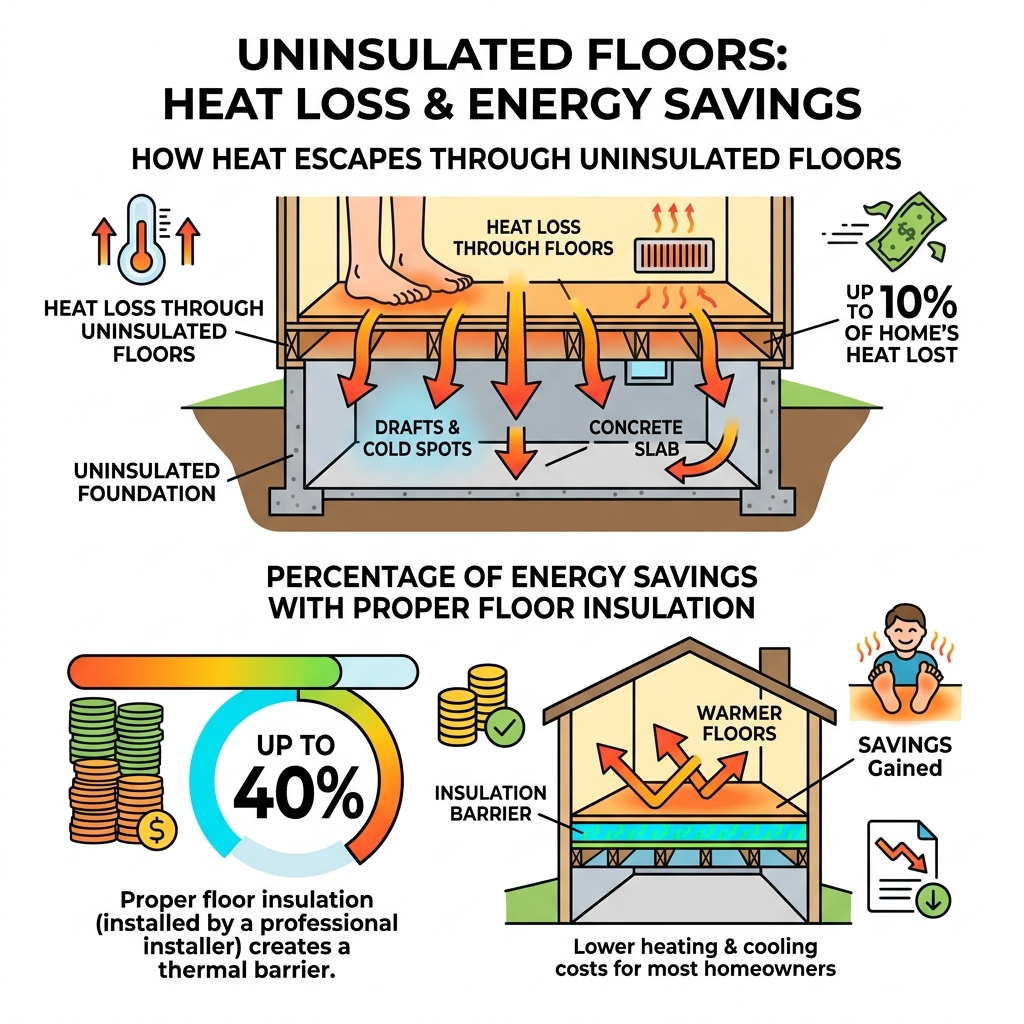
Think about it this way: you could be losing up to 10% of your home’s heat straight through your floors. And according to the EPA, 9 out of 10 homes in the US are currently underinsulated.
That’s a lot of cold feet — and a lot of wasted money on heating bills.
The good news? Proper floor insulation can cut your heating and cooling costs by as much as 40%. That’s not a small number. For most homeowners dealing with drafty rooms and sky-high winter energy bills, it’s a fix that pays for itself.
Whether you’re dealing with a freezing basement, a chilly room above the garage, or just floors that never seem to warm up — the right insulation, installed correctly, makes a real difference.
Why You Need a Professional Floor Insulation Installer
While many of us love a good weekend warrior project, floor insulation is one area where calling in a professional floor insulation installer pays dividends. It isn’t just about stuffing fluff between boards; it’s about creating a sophisticated thermal envelope that protects your home from the ground up.
Thermal Performance and Comfort
The most obvious reason to insulate is to stop the “ice rink” effect on your hardwood or tile. When floors are uninsulated, they act as a thermal bridge, pulling heat out of your living space and into the cold void of a crawl space or basement. A professional ensures that the insulation is installed without gaps or compression, which are the two biggest enemies of thermal resistance.
Noise Reduction
Did you know that installing floor insulation can reduce unwanted noise levels from spaces above by up to eight times? Whether it’s a teenager practicing the drums in the basement or the sound of footsteps echoing from the floor above, mineral wool and stone wool products are “magnets” for sound travel. By 2050, more than 50% of the world’s population will live in cities, making noise disturbance a primary concern for modern homeowners.
Fire Safety and Moisture Control
Safety is paramount. Professional installers often use materials like stone wool, which can withstand temperatures exceeding 2000°F. This adds a critical layer of fire resistance to your home’s structure. Furthermore, moisture control is a huge factor. In crawl spaces and basements, improper insulation can trap moisture against wood joists, leading to rot and mold. A pro knows how to use vapor barriers and energy-saving methods for home insulation to keep your structure dry.
Boosting Property Value
Energy efficiency is a major selling point in today’s real estate market. A home with documented professional insulation upgrades is more attractive to buyers who are wary of high utility costs. It shows the home has been well-maintained and optimized for modern living standards.
Key Benefits of Professional Installation:
- Draft Reduction: Eliminates the “phantom” breezes that chill your ankles.
- Consistent Temperatures: No more “hot spots” or “cold zones” in different rooms.
- Lower Utility Bills: Significant long-term savings on HVAC wear and tear.
- Pest Prevention: Properly sealed and installed insulation is less attractive to nesting rodents.
Best Materials for a Floor Insulation Installer to Use
Choosing the right “stuffing” for your floors depends on your budget, your home’s structure, and your local climate. Here are the heavy hitters in the industry:
- Fiberglass Batts: The most common and affordable option. These are easy to install between joists but must be fitted perfectly to avoid gaps.
- Stone Wool (Mineral Wool): Products like ROCKWOOL are top-tier for floors. They offer superior soundproofing, fire resistance, and are made from up to 50% recycled content.
- Cellulose: Often used as “dense-pack” in finished ceilings (like a garage ceiling with a bedroom above). It is highly eco-friendly, made largely from recycled paper.
- Spray Foam: Excellent for air sealing and high R-value in tight spaces. It creates its own vapor barrier and is great for rim joists.
- Rigid Foam Board: Ideal for insulating concrete slabs or basement floors. It provides a continuous thermal break that batts cannot achieve.
When selecting materials, we always refer to the ultimate guide to insulating your home to ensure the R-value meets local building codes.
Key Locations for a Floor Insulation Installer
Not all floors are created equal. Depending on where the floor sits, we use different strategies:
- Crawl Spaces: These are often the biggest culprits for cold floors. We focus on insulating the floor joists or the crawl space walls themselves.
- Basements: Insulating a basement floor often requires a specialized subfloor system to prevent moisture from the concrete slab from reaching your finished flooring.
- Cantilevered Floors: These are floors that “overhang” the exterior wall. They are notoriously cold because they are exposed to outside air on three sides.
- Garage Ceilings: If you have a living space above a garage, it needs high-performance insulation to block both the cold and hazardous exhaust fumes.
Understanding these locations is vital for insulating your home for energy efficiency and ensuring no area is left unprotected.
Choosing the Right Materials for Your Floors
Deciding on the right material isn’t just about picking the thickest batt. We have to balance thermal resistance (R-value), moisture management, and cost.
R-Value and Material Comparison
The R-value measures how well a material resists heat flow. The higher the number, the better the insulation. In many climates, floor insulation should aim for R-13 to R-30 depending on the specific application.
| Material Type | Typical R-Value (per inch) | Best Use Case | Eco-Friendliness |
|---|---|---|---|
| Fiberglass | 2.2 – 3.8 | Standard wood joists | Moderate (recycled glass) |
| Stone Wool | 3.3 – 4.2 | Soundproofing & Fire safety | High (recycled stone/slag) |
| Cellulose | 3.2 – 3.8 | Blown-in for closed cavities | Very High (recycled paper) |
| Rigid Foam | 3.8 – 6.5 | Concrete slabs/Basements | Low to Moderate |
| Spray Foam | 3.5 – 6.5 | Rim joists & Air sealing | Low (chemical based) |
Vapor Barriers and Kraft Facing
One of the most common questions we get is: “Which way does the paper face?” When using kraft-faced batts, the paper (the vapor retarder) should almost always face the warm-in-winter side of the cavity. For floors over a crawl space, this means the paper faces up against the subfloor. A professional floor insulation installer will ensure this is correct to prevent moisture from condensing inside the insulation.
Sustainability and Durability
We are big fans of green flooring solutions for your home. Stone wool is a standout here; it doesn’t sag over time, it’s resistant to mold, and it maintains its R-value for the life of the building. Research shows that mineral wool remains effective for over 50 years without significant degradation.
Step-by-Step Guide to Floor Insulation Installation
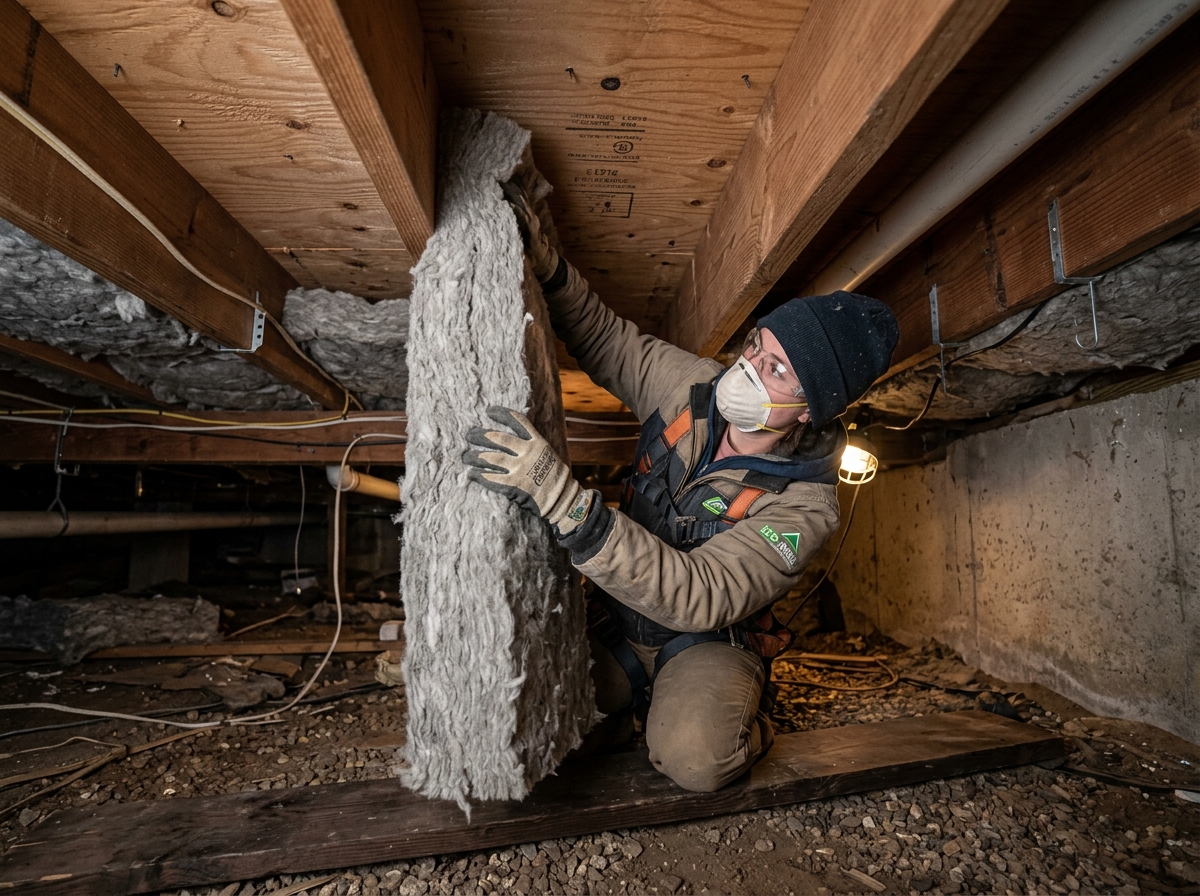
If you’re wondering how the pros do it, here is our standard workflow for a high-performance floor insulation project.
1. Preparation and Measuring
We start by measuring the width between your floor joists. Most homes have joists spaced either 16 inches or 24 inches apart. Buying the correct width is crucial for a “friction fit”—where the insulation stays up on its own without being squeezed too tight.
2. Air Sealing: The Secret Step
Before any insulation goes in, we perform air sealing. Insulation stops heat transfer, but it doesn’t stop air leaks. We use spray foam or caulk to seal holes where plumbing pipes, electrical wires, or HVAC ducts penetrate the floor. This is a vital part of learning how to seal air leaks to save energy.
3. Cutting and Fitting
Insulation should be cut to fit snugly but not be compressed. If you squash a 6-inch batt into a 4-inch space, you actually lose R-value! We use a sharp utility knife or an insulation saw to cut around obstructions like:
- HVAC Boots: We cut the insulation to wrap around the vent.
- Electrical Wiring: We often split the batt in half (thickness-wise) and tuck the wire in the middle like a sandwich.
- Plumbing Pipes: Similar to wires, we notch the insulation to fit around the pipe to ensure there are no “voids” or empty air pockets.
4. Securing the Insulation
In a floor application, gravity is working against us. While stone wool often stays in place via friction, fiberglass batts usually need help. We use:
- Wire Fasteners (Tiger Teeth): Spring-metal wires that wedge between the joists to hold the batts up.
- Insulation Hangers: Long wires that span the joist bay.
- Polypropylene Netting: Sometimes used in large areas to keep everything tight against the subfloor.
5. Managing Rim Joists
The rim joist is the area where the floor joists meet the exterior wall. This is a major source of energy loss. We typically use rigid foam or spray foam here to create an airtight, insulated seal before the main batts are installed.
Common Mistakes and Maintenance Tips
Even with the best intentions, things can go wrong. Here is what we look out for to ensure your insulation lasts a lifetime.
Avoid the “Compression Depression”
We can’t say it enough: Do not compress your insulation. Insulation works by trapping tiny pockets of air. When you squeeze it, you squeeze the air out, and the R-value plummets. It’s like wearing a heavy down jacket—if you vacuum-seal it against your body, it won’t keep you warm anymore!
Watch for Gaps and Voids
A 1% gap in your insulation coverage can lead to a much larger percentage of heat loss. We ensure the insulation extends all the way to the outside edge of each joist bay and that the ends of the batts are butted tightly together.
Moisture and Rodent Management
If your insulation gets wet, it’s game over. Wet fiberglass loses almost all its insulating power and can lead to mold. We always check for plumbing leaks before insulating. Additionally, in crawl spaces, we recommend a vapor barrier on the ground to keep the humidity down. Check out our catch the heat: insulation tips for winter for more on protecting your home during the wet months.
Periodic Inspections
We recommend checking your floor insulation once a year. Look for:
- Sagging: If batts are falling down, they need new fasteners.
- Discoloration: This usually indicates air leaks (the insulation is acting like a filter) or moisture issues.
- Pest Activity: If you see “tunnels” or droppings, it’s time to call an exterminator and potentially replace the affected sections.
When you are remodeling your home for energy efficiency, always make the floor insulation a priority—it’s much easier to fix when the “guts” of the house are exposed!
Frequently Asked Questions about Floor Insulation
How much does floor insulation installation cost?
The cost varies based on a few factors:
- Material Choice: Fiberglass is the cheapest, while spray foam and high-end stone wool are more of an investment.
- Accessibility: A wide-open basement is much cheaper to insulate than a cramped, 18-inch-high crawl space.
- Square Footage: Naturally, larger homes cost more.
- Labor Rates: Depending on your region, labor can range from $1.00 to $3.00 per square foot.
On average, most homeowners find that the energy savings pay for the installation within 3 to 7 years.
Can I DIY floor insulation or should I hire a pro?
You can DIY, but it’s a dirty, itchy, and physically demanding job. A professional floor insulation installer has the specialized gear (HEPA vacuums, high-end protective suits, and industrial staplers) to do the job safely and quickly. Plus, pros ensure your project meets strict building codes and RESNET Grade 1 installation standards, which is often required for energy rebates.
What are the signs my floors need better insulation?
- The “Slipper Test”: If you can’t walk across your floor in winter without thick socks or slippers, you have a problem.
- High Energy Bills: If your heater is running constantly but the house still feels “drafty.”
- Creaky Floorboards: Sometimes, temperature swings cause wood to expand and contract excessively, leading to noise.
- Temperature Swings: If the living room is 72 degrees but the floor feels like it’s 50, your insulation is failing.
Conclusion
At Financefyx, we believe that a comfortable home shouldn’t break the bank. Investing in a professional floor insulation installer is one of the smartest moves you can make for long-term ROI. Not only will you save thousands of dollars on energy bills over the years, but you’ll also enjoy a quieter, safer, and much more comfortable living environment.
Don’t let your hard-earned money leak out through the floorboards. Whether you choose stone wool for its incredible soundproofing or eco-friendly cellulose, the most important step is getting it done right.
Ready to take control of your home’s climate? Start saving today with our energy saving tips and turn those freezing floors into a cozy foundation for your family!
