
How to Fix a Drafty uPVC Window for Good
Why a uPVC Window Draught Is Costing You More Than You Think
uPVC window draught is one of the most common — and most expensive — problems homeowners face in winter. Cold air sneaks in, warm air escapes, and your heating system works overtime to compensate.
Here’s a quick overview of how to fix it:
- Identify the source — use a candle, paper test, or visual inspection to find where air is getting in
- Check the seals — perished or loose rubber gaskets are the most common cause
- Adjust the hardware — loose hinges, dropped sashes, and misaligned locks can all create gaps
- Apply weatherstripping or sealant — self-adhesive strips and silicone sealant handle most small gaps
- Call a professional if the frame is warped, glazing is blown, or DIY fixes haven’t worked
The problem isn’t always obvious. Cold air can enter through gaps in beading, failed seals around the glass, misaligned frames, or poor installation — even in brand-new windows. One homeowner in a UK forum noted their new French doors and windows left the room cold enough that a thermal camera showed glass surface temperatures as low as 3°C, despite indoor heating running normally.
The good news? Most uPVC window draughts can be fixed yourself with basic tools and inexpensive materials. This guide walks you through every step.
Common Causes of Draughts in New and Old Windows
When we think of uPVC, we think of durability and high-tech insulation. However, even the sturdiest frames succumb to physics and time. Understanding why a upvc window draught occurs is the first step toward a warmer home.
Perished or Damaged Seals
The rubber gaskets (the black or grey strips around the glass and frame) are your first line of defense. Over time, these seals lose their elasticity. They can become brittle due to UV exposure or flattened by constant compression. When a seal “perishes,” it shrinks or cracks, leaving a direct path for whistling winds.
Misaligned Hinges and Dropped Sashes
If your window doesn’t close with a satisfying “thud” or requires a bit of a lift to lock, the sash has likely dropped. Gravity is a persistent foe; over years of use, the weight of the double-glazed unit can cause the hinges to shift. This creates a gap at the top or side of the window where the seal no longer meets the frame.
Installation Errors and Twisted Frames
Surprisingly, a upvc window draught isn’t exclusive to old houses. Poor installation can leave gaps between the window frame and the brickwork. If a frame is “toe-and-heeled” incorrectly during fitting, it can twist, meaning the locking points don’t pull the window tight against the gaskets. We often see cases where installers skip the expanding foam or fail to seal under the window sill, allowing cold air to bypass the window entirely and enter through the wall cavity.
Gaps in Beading
The plastic strips that hold the glass in place are called beads. If the mitred corners (where the beads meet) aren’t cut precisely, they leave tiny gaps. While these look like minor aesthetic flaws, they can expose internal drainage holes in the frame, effectively turning your window into a straw that sucks in cold air.
To better understand how these gaps affect your wallet, check out our guides on how to seal air leaks to save energy and insulating your home for energy efficiency.
How to Identify the Source of a uPVC Window Draught
Before you start wielding a screwdriver, you need to play detective. A draught can be elusive; sometimes the air you feel on your neck isn’t coming from where you think it is.
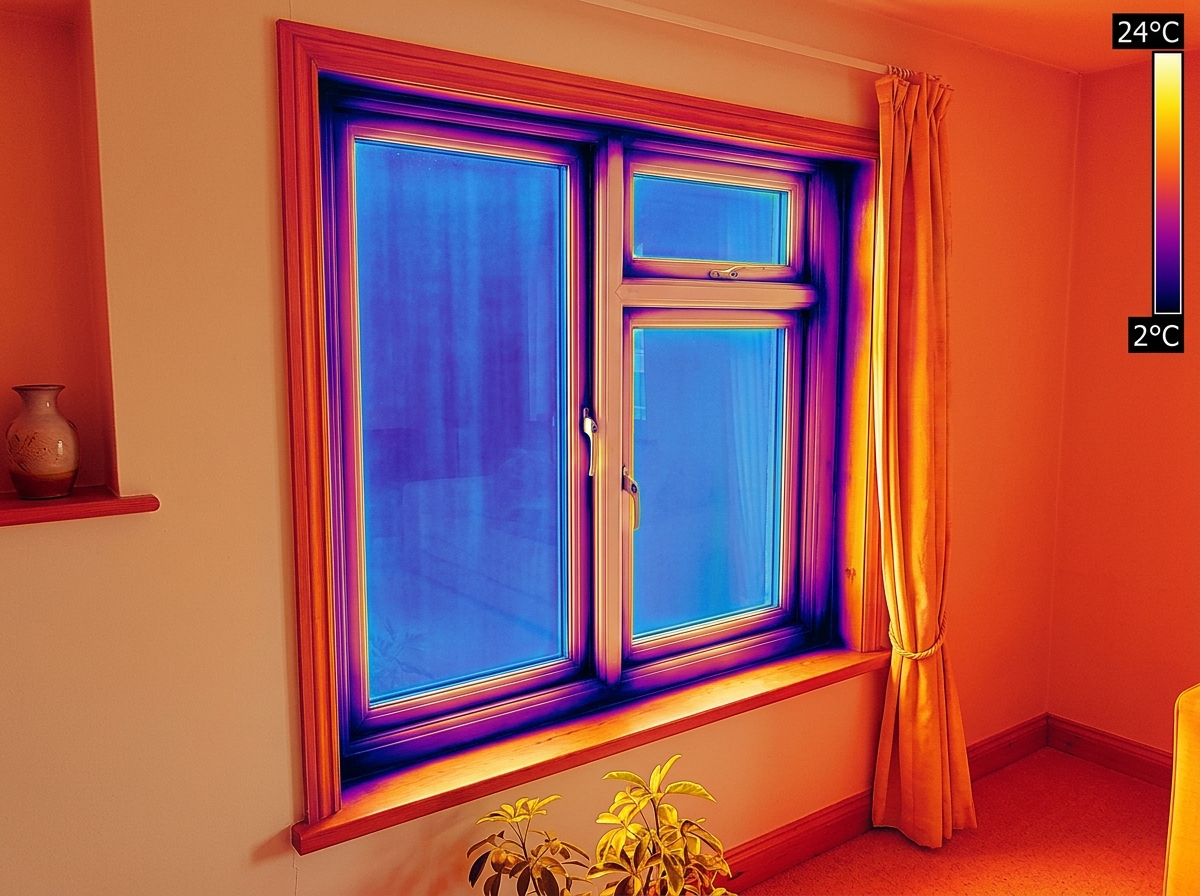
The Visual Inspection
Start with the basics. Open the window and look at the black rubber seals. Are they flat? Are there gaps in the corners? Look for “daylight” through the frame when the window is closed. Also, check for “misting” or condensation between the glass panes—this is a sign the unit has failed, which often coincides with draught issues.
The Candle or Incense Test
On a windy day, light a candle or an incense stick (a smoke taper) and move it slowly around the edges of the window frame. If the flame flickers or the smoke dances wildly, you’ve found your leak. This is particularly effective for finding gaps in the silicone seal between the frame and the wall.
The Paper Test
This is a classic for a reason. Place a sheet of paper (or a £5 note if you’re feeling fancy) across the window frame and close the window. Try to pull the paper out. If it slides out easily, the seal isn’t tight enough. If it offers resistance or rips, that section is well-sealed. Repeat this at intervals all the way around the sash.
The Credit Card Check
Similar to the paper test, try sliding a credit card between the sash and the frame from the outside. If it goes in easily, the locking cams aren’t pulling the window tight enough. For more diagnostic tips, see our article on how to stop the chill with easy ways to fix drafty uPVC windows. You can also find professional insights in this comprehensive guide to stopping draughts.
DIY Solutions and Materials for Draught-Proofing
Fixing a upvc window draught doesn’t always require a contractor. Most homeowners can tackle these repairs with a small kit of supplies.
Your Draught-Busting Toolkit:
- Allen Keys (4mm and 5mm): Essential for hinge adjustments.
- Screwdrivers: Both Phillips and flathead for tightening handles and hardware.
- Silicone Sealant: High-quality, UV-resistant silicone for external gaps.
- Weatherstripping: Self-adhesive foam or rubber strips for a quick fix.
- Replacement Gaskets: If your old seals are beyond saving.
- Silicone Spray: To lubricate moving parts.
If you aren’t ready to take the window apart, you can use “soft” solutions like insulated window treatments or other energy-saving methods for home insulation.
Adjusting Hardware to Fix a uPVC Window Draught
Many people assume a draught means the window is “broken.” Often, it’s just out of alignment. uPVC hardware is designed to be adjustable.
Hinge Adjustments Most uPVC hinges have small adjustment screws. By turning these with an Allen key, you can move the sash up, down, left, or right. If your window has a gap at the top, you likely need to adjust the vertical screw to “lift” the sash back into its original position.
Locking Cams (The “Summer/Winter” Setting) Open your window and look at the side of the sash. You’ll see small metal cylindrical bolts called “cams” or “mushrooms.” These slide into the keeps on the frame. Most cams are eccentric—meaning they aren’t perfectly centered. By using an Allen key to rotate them, you can increase or decrease the pressure the window applies to the seal when locked. Many installers refer to this as the “winter setting” (tighter) and “summer setting” (looser to allow for expansion).
Friction Stays If the window feels too loose when open or doesn’t pull in tight on the hinge side when closed, you may need to tighten the friction stay screw. For a deeper dive into these mechanical fixes, check out this practical guide to adjusting uPVC windows.
Replacing Seals to Eliminate a uPVC Window Draught
If the hardware is tight but the air is still whistling through, it’s time to look at the gaskets.
Replacing a seal is surprisingly satisfying. Most uPVC gaskets are “push-fit.” You simply pull the old, brittle rubber out of the groove and press the new one in.
- EPDM Gaskets: These are the gold standard. They are weather-resistant and don’t shrink as much as cheaper PVC versions.
- Bubble vs. Flipper Seals: “Bubble” seals look like a small tube and are great for compression. “Flipper” seals have a flat tail that acts like a weather vane to block wind. Ensure you buy the correct profile for your specific window brand.
- The Golden Rule: Always clean the groove thoroughly before installing the new seal. Dirt and old rubber bits will prevent a snug fit.
For a list of different seal types and how they work, you can explore these 7 solutions that really work.
When to Seek Professional Help or Replace Windows
We love a good DIY project, but sometimes discretion is the better part of valor. There are moments when a upvc window draught indicates a structural failure that a bit of silicone won’t fix.
When to Call the Pros:
- Blown Double Glazing: If there is condensation inside the two panes of glass, the vacuum seal has broken. While you can sometimes replace just the glass unit, it often indicates the frame is also reaching its end of life.
- Warped Frames: If the uPVC itself has bowed or twisted (common in very old or cheap windows exposed to high heat), no amount of adjustment will make it airtight again.
- Structural Damage: If the frame is moving away from the wall or the brickwork is cracking around it.
- Age: Most uPVC windows have a lifespan of 20 to 25 years. If yours are celebrating their silver jubilee, they likely lack the multi-chambered thermal efficiency of modern units.
| Repair Type | DIY Cost (Approx) | Professional Cost (Approx) |
|---|---|---|
| Seal Replacement | £10 – £30 | £75 – £150 |
| Hinge Adjustment | £0 (Tools only) | £60 – £100 |
| Glass Replacement | N/A (Difficult DIY) | £150 – £300 per pane |
| Full Replacement | N/A | £500 – £1,200 per window |
If you’re looking at a full home efficiency overhaul, don’t forget to check your attic insulation as well, as heat rises and escapes through the roof just as easily as through a draughty window.
Long-Term Maintenance to Prevent Future Draughts
Prevention is cheaper than a cure. To keep your windows draught-free for the next decade, we recommend an annual maintenance routine.
- Clean the Tracks: Dirt and grit in the bottom track prevent the window from closing fully. Use a vacuum attachment and a damp cloth once a year.
- Lubricate Moving Parts: Use a light machine oil or silicone spray on hinges, locks, and handles every six months. Avoid thick grease, which attracts dirt.
- Check the External Silicone: The sealant between your window and the brickwork can peel away as your house “settles.” If you see gaps, scrape out the old silicone and apply a fresh bead.
- Tighten Screws: Vibration from wind and constant use can loosen the screws on handles and hinges. A quick turn with a screwdriver can prevent a “dropped sash” before it starts.
For more home maintenance wisdom, see the ultimate guide to insulating your home.
Frequently Asked Questions about uPVC Window Draughts
Why is my brand-new uPVC window still draughty?
It’s incredibly frustrating, but new windows can be draughty due to “installation twist.” If the frame isn’t perfectly square in the opening, the sash won’t meet the seals evenly. Another common culprit is poor beading mitres or unsealed gaps under the window sill. If your windows are under warranty, do not attempt DIY fixes—call the installer back to rectify the alignment.
Can I use silicone to seal a uPVC window shut?
Technically, yes, but we strongly advise against it. Sealing a window shut is a fire hazard and eliminates necessary ventilation, which can lead to mould and dampness. It also makes future repairs nearly impossible. Use temporary “Gap Seal” or removable weatherstripping if you need a stop-gap solution for a window you don’t intend to open.
How often should I replace window weatherstripping?
As a general rule, expect to replace rubber seals every five to ten years. If you live in a coastal area with high salt spray or a south-facing home with intense sun exposure, the rubber will perish faster. If it feels “crunchy” or doesn’t spring back when pressed, it’s time for a change.
Conclusion
A upvc window draught isn’t just a minor annoyance; it’s a drain on your comfort and your bank account. By taking the time to identify the source—whether it’s a perished seal, a misaligned hinge, or a gap in the external masonry—you can reclaim your home’s warmth.
Most of these fixes are well within the reach of a weekend DIY enthusiast. However, if your windows are nearing the two-decade mark or the frames are visibly warped, it might be time to consider an upgrade. At Financefyx, we believe that an energy-efficient home is a valuable home. For more ways to protect your property and lower your bills, explore the ultimate guide to insulating your home. Stay warm out there!
