
The Ultimate Guide to Double Glazing Draft Seals
Why a Double Glazing Draft Seal Is the Fastest Fix for a Cold, Expensive Home
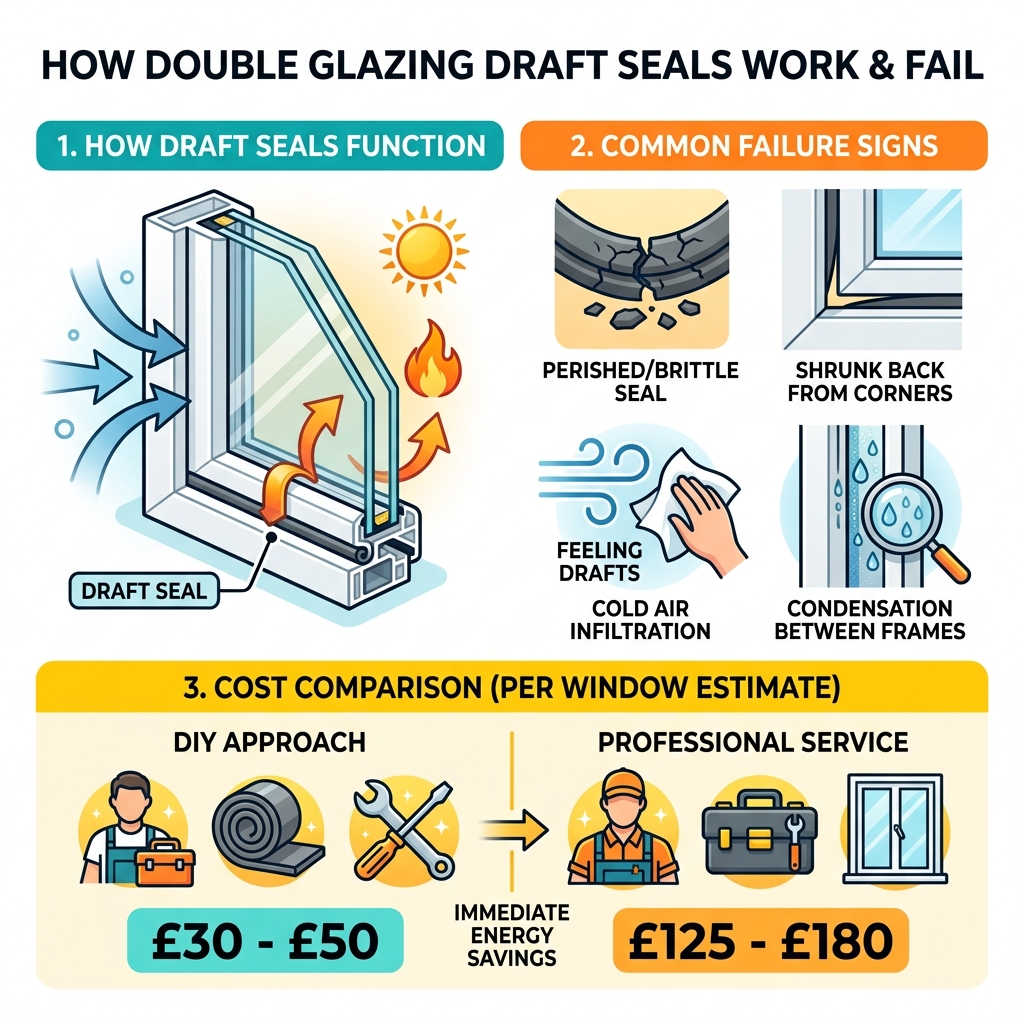
A double glazing draft seal is the rubber or foam strip fitted between your window frame and the glass (or between the opening sash and the fixed frame) that keeps cold air out and warm air in. When it fails, your heating works harder, your bills climb, and rooms feel uncomfortably cold — even with the windows shut.
Here’s how to fix a double glazing draft seal quickly:
- Identify the source — run your hand or a tissue around the window edge to feel for cold airflow
- Choose the right seal — match the gasket profile (bubble, wedge, flipper) to your window type
- Remove the old seal — pull out the perished rubber strip from its groove
- Fit the new seal — push the replacement in without stretching it, starting at a corner
- Test the result — close the window on a strip of paper; it should grip firmly
DIY materials cost around £30–£50 per window. Professional replacement in the UK typically runs £125–£180 per window.
Seals wear out naturally. Rubber gaskets are stretched during fitting and slowly shrink back over time, leaving hairline gaps at corners. UV exposure, pollution, and temperature swings speed this up — especially in urban areas where seals may need replacing every 5 to 10 years, compared to up to 20 years in ideal conditions.
The good news? In most cases, replacing a failed seal is a straightforward DIY job that takes an afternoon and delivers immediate results in warmth and energy savings.
Identifying the Source of Your Double Glazing Draft Seal Issues
Before we start ripping out rubber, we need to play detective. Not every chill in the air is caused by a faulty double glazing draft seal. Sometimes the culprit is a misaligned hinge or a frame that has decided to warp slightly after fifteen years of British weather.
The “Detective Kit” for Draft Detection
You don’t need fancy thermal cameras to find a leak. We recommend these three simple methods:
- The Hand Test: On a windy day, slowly run the back of your hand around the entire perimeter of the window. The back of the hand is more sensitive to temperature changes than the palm.
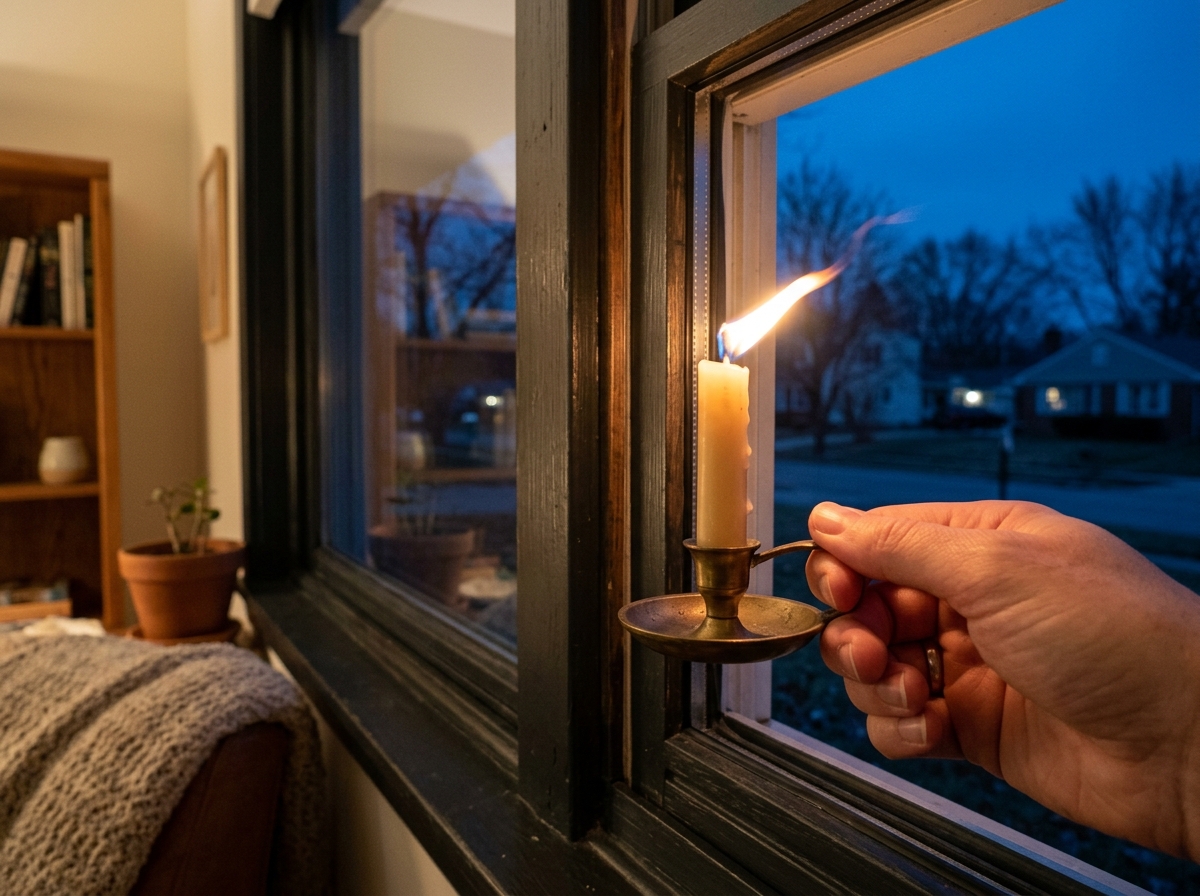
- The Candle Test: Light a candle (carefully!) and move it around the edges of the window frame. If the flame flickers or dances, you’ve found a gap.
- The Tissue Test: Hold a single ply of toilet tissue or a thin piece of thread near the frame. If it gets sucked toward the window or blown away, air is moving through.
Beyond the Seals: Hinges and Locks
Sometimes the double glazing draft seal is perfectly fine, but the window isn’t pressing against it hard enough. Open your window and check the friction stays (the hinges). If they are loose or rusted, the sash won’t pull tight against the frame. Similarly, check the locking “keeps.” If the window handle feels too easy to turn, the locking mechanism might need adjusting to pull the sash tighter into the gasket.
Signs of a failed double glazing draft seal
How do you know if the rubber itself is the problem? Look for these “red flags”:
- Flattened Rubber: New seals are bouncy and “proud” of the frame. Old seals look flat, hard, or brittle.
- Shrinkage: If you see gaps in the corners where two rubber strips should meet, the gasket has shrunken over time.
- Whistling: A high-pitched whistle during a storm is a classic sign of air being forced through a tiny gap in a perished seal.
- Visible Daylight: If you can see a sliver of light between the sash and the frame when the window is locked, your seal has definitely checked out.
For more on managing home leaks, check our guide on how to seal air leaks to save energy.
When the glass unit itself has failed
It is vital to distinguish between a drafty seal and a “blown” unit. If you see condensation or misting between the two panes of glass, the internal seal of the double-glazed unit has failed. This means the insulating argon gas has escaped and been replaced by moist air.
Replacing the double glazing draft seal around the frame will stop the breeze, but it won’t fix the misting. A blown unit usually requires a full replacement of the glass pane itself. You might also notice “distorted reflections” in the glass; this happens because the pressure change inside the unit causes the glass to bow slightly.
Choosing the Right Double Glazing Draft Seal for Your Windows
If you’ve ever looked at a catalog of window gaskets, you probably felt a slight sense of panic. There are hundreds of shapes! Getting the right double glazing draft seal is about matching the “profile” of your existing one.
The Most Common Gasket Types
- Bubble Gaskets: These look like a little O-shape on a stick. They are very common in uPVC windows because they compress easily to create a tight seal.
- Flipper Seals: These have a flat “fin” or “flipper” that pushes against the glass or frame.
- Wedge Gaskets: These are usually pushed into the gap between the glass and the frame after the glass is installed. They look like a tapered wedge.
- E-Seals: Shaped like the letter ‘E’, these provide multiple points of contact for better insulation.
Material Matters: EPDM vs. Q-Lon
Most modern replacements are made of EPDM (ethylene propylene diene monomer) or Q-Lon.
- EPDM is a high-grade synthetic rubber that is incredibly UV stable and doesn’t get brittle in the sun.
- Q-Lon is a foam-based seal with a polyethylene skin; it’s exceptionally good at recovering its shape after being compressed for long periods.
| Material | Durability | Best For | Price Point |
|---|---|---|---|
| EPDM Rubber | 15-20 Years | General uPVC & Aluminium | Mid-range |
| Q-Lon Foam | 20+ Years | Timber & High-end uPVC | Premium |
| Standard PVC | 5-10 Years | Temporary/Budget | Low |
Pro Tip: Use a Sample Pack
Don’t guess the size. Many suppliers offer a “sample pack” containing 100mm strips of 10 or 12 different gasket types. We highly recommend buying one of these first. You can physically push each sample into your window groove to see which one fits snugly without being impossible to install.
Selecting a double glazing draft seal for uPVC frames
uPVC windows almost always use a “push-fit” system. The frame has a small groove (called a “c-channel”), and the double glazing draft seal has a corresponding “arrowhead” that clicks into it. When buying for uPVC, ensure the seal meets the BS7412 standard for weatherproofing. This ensures the material won’t perish after just one summer of direct sunlight.
Learn more about the impact of these choices in our article on insulating your home for energy efficiency.
Material-specific seals for aluminium and timber
- Aluminium: These frames conduct heat much faster than uPVC. It is essential to use seals that work in tandem with the “thermal break” (the plastic strip inside the metal frame). Look for high-compression EPDM seals.
- Timber: Wood is porous and moves with the seasons. It swells in winter and shrinks in summer. For timber, we often recommend foam-based seals like Q-Lon, which can adapt to the changing “moisture swings” of the wood better than rigid rubber.
For those interested in the technical side, the scientific research on weatherstripping from the Department of Energy highlights how metal sweeps and vinyl inserts are critical for thresholds and foot-traffic areas.
Step-by-Step Guide to Replacing Window Seals and Gaskets
Ready to get to work? Replacing a double glazing draft seal is one of the most satisfying DIY tasks because you can feel the difference immediately.
Your DIY Tool Kit
- A utility knife or sharp scissors
- A flat-head screwdriver or putty knife (for prying)
- A bowl of soapy water
- Silicone spray (optional, but makes things much easier)
- A measuring tape
The Replacement Process
- Remove the Old Seal: Find the joint where the two ends of the old seal meet (usually in a corner or at the bottom). Use your putty knife to get under it and pull. It should come out in one long, satisfying string. If it’s very old and brittle, it might snap; just keep prying.
- Clean the Grooves: This is the step most people skip, and it’s why their new seals fail. Use a damp cloth and soapy water to clean all the dirt, spider webs, and old adhesive out of the groove. If the groove is blocked, the new “arrowhead” on your seal won’t click in.
- Measure and Cut: Measure the perimeter of the window. Cut your new double glazing draft seal slightly longer than you need (add about 1-2% extra length). Why? Because rubber naturally wants to shrink.
- The “No-Stretch” Rule: As you push the new seal into the groove, do not pull it. If you stretch the rubber while installing it, it will eventually “snap back” to its original size, leaving gaps in your corners. Instead, “crowd” the rubber into the groove, pushing it slightly back on itself as you go.
- Placement of the Joint: Always start and end your seal in the middle of the hinge side of the window, not in a corner. Corners are the most likely place for leaks to occur, so having a continuous piece of rubber around the corners is much more effective.
- Finishing Touches: Once the seal is in, give it a light misting with silicone spray. This helps it seat correctly and prevents it from sticking to the frame when you first close it.
For a broader view of home projects, see the ultimate guide to insulating your home.
Preparing the frame for a new double glazing draft seal
If you are resealing the outside of the window (where the frame meets the brickwork), you’ll need to remove the old silicone caulk first. Use a caulk remover tool and then wipe the area with an adhesive cleaner. The surface must be bone-dry before you apply new low-modulus silicone.
For more seasonal prep, read our catch the heat: insulation tips for winter.
Temporary Fixes and Professional Repair Costs
Sometimes you just need to survive a cold week before the replacement gaskets arrive.
Effective Temporary Fixes
- Draught-Proof Tape: Self-adhesive foam or rubber tape can be stuck onto the frame where the sash meets it. It’s cheap, but it usually only lasts one season and can leave a sticky residue.
- Window Film: This is a clear plastic sheet you shrink-wrap over the entire window frame using a hairdryer. It creates an extra air pocket and is great for stopping drafts from both the seals and the glass.
- Closing Wedges: If your uPVC window has “bowed” in the middle (common in tall windows), you can buy small plastic “wedges” that screw onto the frame. They force the window sash to pull tighter against the gasket as you close it.
Professional Costs vs. DIY Savings
In London and other major UK cities, a professional glazier will charge between £125 and £180 per window for seal replacement. This usually includes a “tune-up” of the hinges and locks.
If you choose the DIY route, you can buy a 20-meter roll of high-quality double glazing draft seal for about £20–£40. This is usually enough to do two or three medium-sized windows. The savings are massive, but the trade-off is your time (expect to spend 2-4 hours per window if it’s your first time).
| Approach | Cost (Per Window) | Time | Warranty |
|---|---|---|---|
| DIY | £30 – £50 | 2-4 Hours | None |
| Professional | £125 – £180 | 1 Hour | 1-5 Years |
When to call a professional glazier
There are times when a new double glazing draft seal won’t be enough:
- Rotten Timber: If the wood is soft or crumbling, a new seal has nothing to grip.
- Cracked uPVC: If the frame itself is cracked, it may have lost its structural integrity.
- Warped Sashes: If the window sash has warped into a “banana” shape, no amount of rubber will fill that gap. A pro might be able to “re-pack” the glass to straighten the frame.
- Hardware Failure: If the hinges are bent or the locking bolts are snapped.
Check out other energy saving methods for home insulation to see where else you can save.
Maintaining Your Windows for Long-Term Energy Efficiency
Once you’ve installed your new double glazing draft seal, you want it to last.
The Quarterly Maintenance Routine
We recommend a quick check-up every three months:
- Clean the Seals: Wipe the rubber gaskets with a cloth and mild soapy water. Avoid harsh chemical cleaners or bleach, as these can strip the oils from the rubber and make it go brittle.
- Clear Drainage Holes: Open the window and look at the bottom of the frame. You’ll see small slots. These are drainage holes. If they get blocked with dirt, water will sit against your seals and cause them to rot or grow mould.
- Lubricate the Hinges: Use a light machine oil (like 3-in-1) or silicone spray on the moving parts of the hinges. This ensures the window closes squarely every time.
- Check the Alignment: If you notice the window is “dropping” or catching on the frame, adjust the hinges immediately. A misaligned window will crush one side of your double glazing draft seal while leaving a gap on the other.
For more window-specific tips, see our guide on how to save energy with insulated window treatments.
Improving efficiency with a double glazing draft seal
Beyond just stopping the breeze, a fresh seal significantly improves your home’s “sound insulation.” If you live near a busy road, you’ll notice that new seals make the house much quieter. By restoring the airtightness of your home, you are also reducing your carbon footprint and taking a bite out of those ever-rising heating bills.
For more ways to keep the heat in, don’t miss our attic insulation tips save energy and money.
Frequently Asked Questions about Double Glazing Draft Seals
How long do double glazing seals typically last?
In a quiet, rural area, you might get 20 years out of them. However, in urban environments like London, pollution and “acid rain” can degrade the rubber much faster. We generally see seals needing replacement every 5 to 10 years in cities.
Can I use silicone instead of a rubber gasket?
We don’t recommend it. While you can squirt silicone into the gap, it makes a mess and creates a permanent bond. If you ever need to replace the glass or adjust the window, you’ll have a nightmare on your hands. Silicone also doesn’t “rebound” like a proper gasket, so it will eventually fail as the window moves.
Why is there a draft even after I replaced the seals?
If you’ve replaced the double glazing draft seal and still feel a chill, check the “perimeter” (where the frame meets the wall). The sealant there can crack as the house settles. You might also have a gap under the internal windowsill or through the “trickle vents” at the top of the frame. Remember: do not block trickle vents permanently, as they are essential for preventing mould!
Conclusion
At Financefyx, we believe that home maintenance is the ultimate form of energy conservation. Replacing a double glazing draft seal is one of those rare home improvements that pays for itself in a single winter. Whether you’re tackling the project yourself for £30 or calling in a pro to handle a whole house of windows, the result is the same: a warmer, quieter, and more efficient home.
Don’t let your hard-earned money leak out through shrunken rubber. Take a look at your windows today, perform the candle test, and take the first step toward a draft-free life. For more comprehensive advice, check out The Ultimate Guide to Insulating Your Home.
