
Shrink-Wrap Your House: Using Plastic to Cover Windows This Winter
Why Plastic for Drafty Windows Is One of the Smartest Winter Fixes You Can Make
Plastic for drafty windows is a simple, low-cost way to stop cold air from creeping in and keep your heating bills under control this winter.
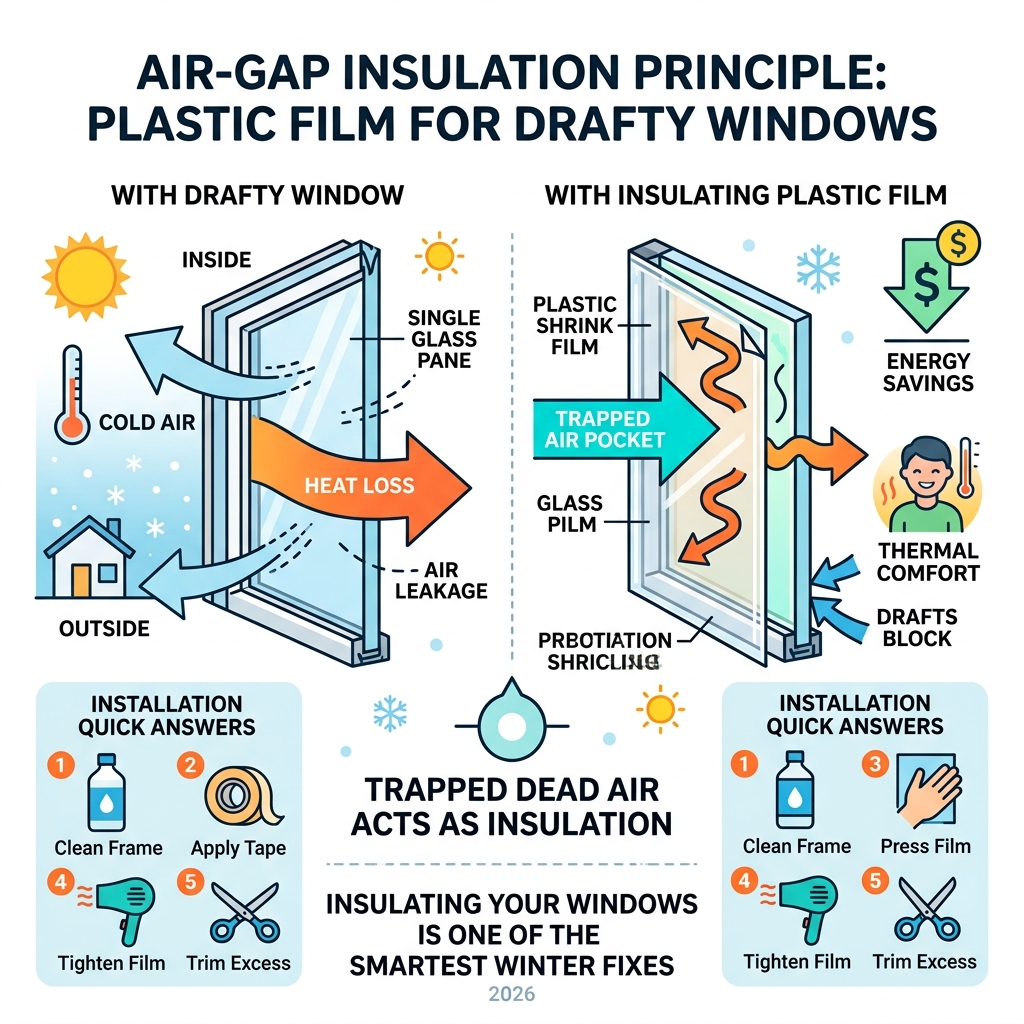
Quick answer: How to use plastic for drafty windows
- Clean your window frame with rubbing alcohol
- Apply double-sided tape around the frame perimeter
- Press clear plastic shrink film onto the tape
- Use a hair dryer to tighten the film until smooth and clear
- Trim any excess film with scissors
That’s it. Most windows take under 20 minutes. The whole project costs less than $100.
Windows are one of the biggest sources of heat loss in a home. In fact, heat loss through windows can account for 25 to 30 percent of your home’s total heating energy use. If your rooms feel chilly no matter how high the thermostat goes, your windows are likely the culprit.
The good news? You don’t need to replace them to feel the difference.
A plastic window insulation kit creates a thin air pocket between the film and the glass. That trapped air acts as an extra layer of insulation — similar to how a double-pane window works. It blocks drafts, reduces condensation, and can cut heat loss through windows by up to 50 percent when installed correctly.
It’s a weekend project that pays for itself within a month or two of heating season.
The Benefits of Using Plastic for Drafty Windows
When we talk about plastic for drafty windows, we aren’t just talking about a “cheap fix.” We are talking about a scientifically sound method of weatherization. The primary benefit is the creation of a “dead air” space. Air itself is a poor conductor of heat, so when it is trapped between a sheet of plastic and your window glass, it acts as a thermal buffer.
According to the Department of Energy, heat loss through windows is a massive drain on residential energy. By applying a simple plastic barrier, you can save an average of 15 percent on these costs when you seal the gaps around your home. For many of us, that translates to $20 to $60 off our monthly heating bills during the peak of winter.
Beyond the immediate cash savings, there are several technical improvements to your home’s performance:
- R-Value Increase: The R-value measures a material’s resistance to heat flow. Some high-quality window insulation kits can increase the R-value of your window area by up to 90%.
- U-Factor Reduction: The U-factor measures how well a window keeps heat from escaping. Adding plastic film can reduce the U-factor by 10 to 15 percent, making your home significantly more efficient.
- Condensation Control: We’ve all seen that annoying fog or frost on the inside of windows. This happens when warm, moist indoor air hits the cold glass. By sealing the window with plastic, you prevent that moist air from reaching the glass, which drastically reduces condensation and protects your wooden frames from rot and mold.
- HVAC Longevity: When your home holds heat better, your furnace doesn’t have to kick on as often. This reduces wear and tear on your heating system, potentially extending its lifespan.
For a deeper dive into how these improvements fit into your overall home strategy, check out our guide on insulating-your-home-for-energy-efficiency.
Identifying Air Leaks in Your Home
Before we start sticking plastic everywhere, we need to know where the problems are. Not every window needs a full plastic wrap, though in older homes, it’s usually a safe bet. You can use the Home Energy Yardstick to see how your home’s energy use compares to others, but for a more “boots on the ground” approach, look for these signs:
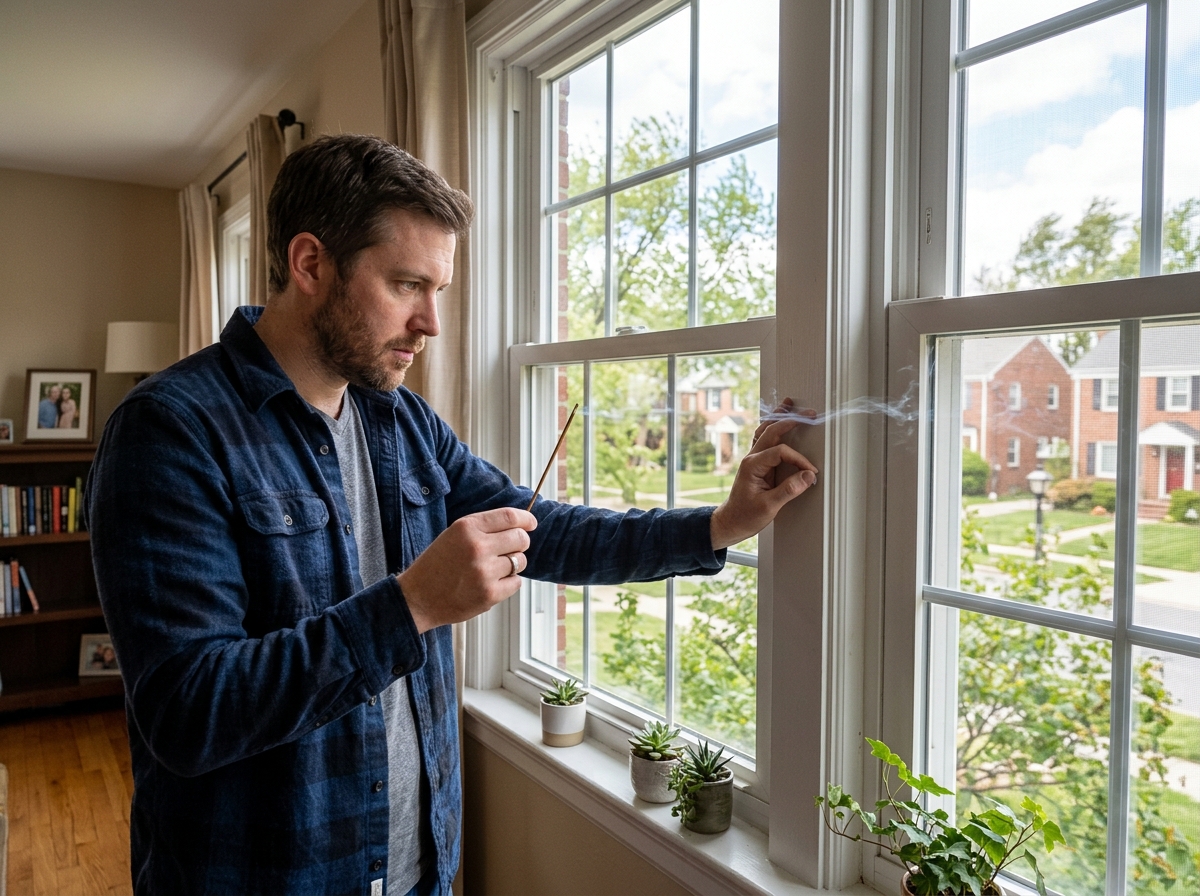
- The Incense Test: This is a classic DIY trick. Light an incense stick (or a damp match) and slowly move it around the edges of your window frame on a windy day. If the smoke wafts horizontally or gets sucked toward the window, you’ve found a leak.
- The Paper Test: Close your window on a single sheet of paper. If you can pull the paper out easily without it tearing, the seal is too loose, and air is definitely getting through.
- Physical Clues: Look for peeling paint around the frames, which often indicates moisture from drafts. If you see dust or soot collecting on the window sill, or if you can hear the windows rattling when the wind blows, those are clear indicators that you need plastic for drafty windows.
- Temperature Variations: If one room feels significantly colder than the rest of the house despite having the same thermostat settings, check the windows first.
For more tips on finding these hidden energy thieves, see our article on how-to-seal-air-leaks-to-save-energy.
How to Install Window Insulation Kits
Installing plastic for drafty windows is a project almost anyone can handle. It doesn’t require a background in construction—just a little patience and a hair dryer. However, choosing the right type of kit is the first step toward success.
| Kit Type | Best For | Pros | Cons |
|---|---|---|---|
| Shrink Film | Standard windows, long-term winter use | Most airtight, crystal clear, very affordable | One-time use, requires hair dryer |
| Magnetic Kits | Windows you may need to open occasionally | Reusable, very durable, easy to remove | Higher upfront cost, visible frame |
| Static Cling | Renters, quick fixes | No adhesive residue, easiest to apply | Less effective at stopping heavy drafts |
Most homeowners opt for the Shrink Film Kits (like those from Frost King or Duck Brand) because they provide the tightest seal. Some “Max Strength” versions are even two times thicker than standard film, making them a great choice for homes with pets or high-traffic areas where the plastic might get bumped.
Essential Tools for Installing Plastic for Drafty Windows
You probably already have most of these items in your junk drawer or under the sink. Having them ready before you start will make the process much smoother.
- Measuring Tape: To ensure your kit is large enough for your specific window dimensions.
- Rubbing Alcohol (70% Isopropyl): This is the most underrated tool. Cleaning the frame with alcohol ensures the double-sided tape actually sticks. Without it, the “shrink” part of the process will just pull the tape right off the wall.
- Sharp Scissors or a Utility Knife: For trimming the excess film. A fresh blade prevents jagged edges or tearing.
- Hair Dryer: This is what turns a baggy sheet of plastic into a drum-tight, invisible barrier.
- Clean Cloths/Cotton Balls: For the cleaning process.
If you’re looking for other ways to dress up your windows while saving money, you might also consider save-energy-with-insulated-window-treatments as a complementary layer.
Step-by-Step: Applying Plastic for Drafty Windows
Now, let’s get down to business. Follow these steps to ensure a professional-looking finish that stays put until spring.
Step 1: Prep the Surface
We cannot stress this enough: clean the window frame. Use a mixture of soap and water to get the grime off, then follow up with rubbing alcohol on a cotton ball along the entire perimeter where the tape will go. Let it dry completely. If the frame is wet or oily, the tape will fail within 48 hours.
Step 2: Apply the Double-Sided Tape
Apply the tape to the front of the window frame (the molding), not the inside track. This creates a larger air gap, which provides better insulation. Press the tape down firmly as you go around all four sides. Pro Tip: Leave the paper backing on the tape for now!
Step 3: Measure and Cut the Film
Unroll your plastic film. Measure your window and cut the plastic so it is at least 2 inches wider and longer than the taped area. It is much easier to trim excess than it is to stretch a piece that is too small.
Step 4: Press the Film onto the Tape
Peel the paper backing off the top strip of tape first. Press the top of your plastic film onto the adhesive, making sure it’s straight. Then, peel the side and bottom backings and press the film down, pulling it as taut as you can with your hands. Don’t worry about minor wrinkles yet; the heat will take care of those.
Step 5: The Heat Shrink
Turn your hair dryer to its highest heat setting. Start at one corner and move in a slow, circular motion about 4 to 6 inches away from the plastic. You will see the wrinkles disappear as the plastic tightens. Warning: Do not touch the plastic with the hair dryer, or you’ll melt a hole right through it!
Step 6: Trim the Excess
Once the film is tight and clear, use your utility knife or scissors to trim the extra plastic hanging off the edges of the tape.
Pros, Cons, and Common Installation Mistakes
While using plastic for drafty windows is an excellent solution, it isn’t a “set it and forget it” permanent fix. We want to be realistic about what to expect.
The Pros:
- Affordability: You can insulate an entire house for less than the cost of a single nice dinner out.
- Visibility: When done correctly, the plastic is virtually invisible. You won’t even notice it’s there in your holiday photos.
- Rental-Friendly: Since it uses removable tape, it’s the perfect solution for apartment dwellers who can’t make permanent changes.
- Immediate Comfort: You will feel the difference in room temperature almost instantly.
The Cons:
- Temporary: Most kits only last one season (4-6 months). The plastic can become brittle over time due to UV exposure.
- Operation: You cannot open the window once it is sealed. If you like to “air out” the house on a random warm January day, this might be a drawback.
- Safety: In an emergency, you would have to rip through the plastic to use the window as an exit.
Common Installation Mistakes to Avoid:
- Installing on a Freezing Day: If the window frame is too cold (below 50°F), the adhesive might not bond correctly. Try to do this on a milder day or warm the frame slightly with your hair dryer before applying the tape.
- Over-shrinking: If you get too enthusiastic with the hair dryer, you can pull the tape away from the wall or even snap the plastic. Stop as soon as the wrinkles are gone.
- Dirty Surfaces: We’ve said it before, and we’ll say it again: clean the frames! Dust is the enemy of adhesive.
- Leaving the Tape on Too Long: Remove the tape in the spring. If you leave it on for years, the adhesive can bake into the paint, making it much harder to remove without damage.
Frequently Asked Questions about Window Plastic
We get a lot of questions about the “edge cases” of window insulation. Here are the most common ones we encounter.
Can I install plastic insulation over mini-blinds?
Yes, you can! This is a common concern for people who want privacy but also want to stop drafts. The trick is to keep the blinds functional.
- First, make sure the blind wand and lift cords are pulled out toward you.
- Apply the plastic as usual, but when you get to the wand and cords, you can carefully cut a small slit or a square in the center of the film.
- Reinforce the edges of the cut with clear cellophane tape to prevent the plastic from tearing further.
- This allows you to reach through the “porthole” to operate your blinds while the rest of the window remains sealed.
Will window film damage my paint or frames?
Generally, no. Most kits use a specific “window kit tape” that is designed to be removed after a few months. However, if your paint is very old and already peeling, or if you just painted the frames within the last 30 days, you might see some lifting. Removal Tip: When spring arrives, use a hair dryer to warm the tape as you peel it back. This softens the adhesive and protects your paint. If any residue remains, a little bit of isopropyl alcohol or a dedicated adhesive remover will take it right off.
Does plastic window insulation work on double-pane windows?
It does, but the benefit is less dramatic than on single-pane windows. Modern double-pane windows are already designed with an insulating air (or gas) gap. However, if the seals on those windows have failed (you’ll see fogging between the panes), or if the frame itself is drafty, plastic for drafty windows is still a very effective “second skin.”
Just be aware that applying film to some high-end, modern windows might technically void the manufacturer’s warranty due to “thermal stress,” though this is rare. If you have brand-new energy-efficient windows and still feel a draft, you might want to check for gaps behind the trim first.
Conclusion
At Financefyx, we believe that saving money shouldn’t always require a massive upfront investment. Using plastic for drafty windows is the ultimate “low-hanging fruit” of home improvement. It’s cheap, it’s effective, and it makes your living space significantly more comfortable during the harsh winter months.
While plastic film is a fantastic seasonal fix, it’s also a sign that your windows might be reaching the end of their lifespan. If you find yourself needing to shrink-wrap your house every single year, it might be time to start budgeting for a more permanent solution. For more long-term strategies, don’t miss the-ultimate-guide-to-insulating-your-home, where we cover everything from attic baffles to basement sealing.
Stay warm, keep your bills low, and enjoy a draft-free winter!
