
Don’t Get Burned by Bad Commercial Insulation Service
Why Finding the Right Commercial Insulation Near Me Can Make or Break Your Business
Commercial insulation near me is something thousands of business owners search for every year — and for good reason. The wrong choice costs you money every single month on energy bills, and the right choice pays for itself over time.
Here’s a quick answer if you need it fast:
How to find commercial insulation near you:
- Search local contractor directories (Google, Angi) filtered by verified reviews
- Ask for proof of licensing, insurance, and certifications (like Naima 202-96)
- Request free quotes from at least 3 local contractors
- Compare R-values, materials, and total installed cost
- Check for available rebates (IRS Energy Credit, utility programs) before signing
Most commercial buildings lose a significant amount of heated or cooled air through walls, roofs, and gaps around pipes and ducts. That means your HVAC system works harder, your bills climb higher, and your employees or customers feel the discomfort directly.
The stakes are real. Poor insulation doesn’t just hurt your wallet — it can cause moisture buildup, mold growth, and even structural damage over time.
This guide covers everything you need to find a trustworthy contractor, understand your options, and avoid getting burned by bad service.
Commercial insulation near me vocab to learn:
Understanding the Main Types of Commercial Insulation Near Me
When you start looking for commercial insulation near me, you’ll quickly realize that “insulation” is a broad term. Unlike a residential attic where you might just see pink fiberglass, commercial properties require specialized materials designed for steel studs, concrete blocks, and high-traffic mechanical systems.
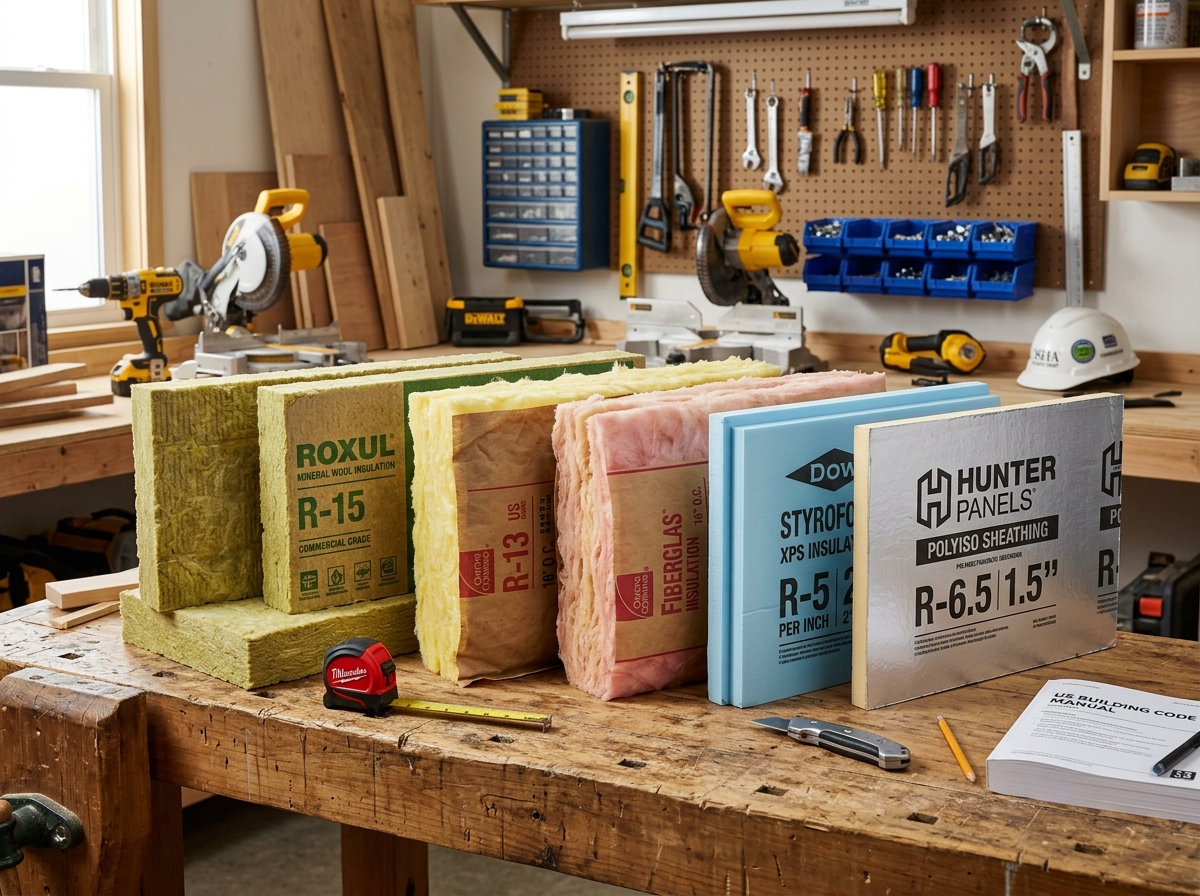
The thermal performance of these materials is measured by their R-value)—the higher the number, the better the material resists heat flow. For commercial buildings, these values typically range from R-11 to R-38 depending on the application. To get a better handle on the technical side, check out a comprehensive thermal insulation comparison to see how different materials stack up.
Spray Foam and Rigid Board Solutions
Spray Polyurethane Foam (SPF) is arguably the most popular choice for modern commercial buildings. It is created by mixing two chemical compounds that react and expand on contact, creating a seamless air barrier.
- Closed Cell Spray Foam: This is the heavyweight champion of insulation. It offers incredibly high R-values—up to R21 in a standard 2×4 wall and R34 in a 2×6 wall. Because it is dense, it actually adds structural integrity (increasing racking strength by 330-400%) and acts as a built-in vapor barrier.
- Open Cell Spray Foam: This version is lighter and expands up to 100 times its size. While it has lower R-values (up to R14 in 2×4 walls), it is excellent for sound conditioning and allows moisture to dissipate, which is vital in certain climates.
If spray-on isn’t the right fit, many businesses opt for Rigid Board Insulation. Usually made from expanded or extruded polystyrene or polyisocyanurate, these boards are often used in concrete block walls or refrigeration areas. They provide a high R-value in a thin profile, which is perfect when space is at a premium. If you’re looking at wall options specifically, you can stop the draft with these exterior wall insulation choices.
Specialized K-13 and Safing Insulation
Commercial spaces often have unique needs that standard batts can’t meet.
K-13 insulation is a spray-applied finish made from recycled cellulose fibers treated with fire retardants. It’s a “fast and durable” solution that can be left exposed. You’ll often see it on the ceilings of modern restaurants or sports arenas because it comes in various colors and provides exceptional acoustic performance.
Safing insulation, usually made of mineral wool, is a critical life-safety component. It is installed at the top of wall headers and slab edges between floors to prevent the spread of fire and smoke. When searching for commercial insulation near me, ensure your contractor is familiar with Factory Mutual certifications for these types of safety installs.
Key Benefits: Why Your Business Needs Professional Insulation
Investing in high-quality insulation isn’t just about following building codes; it’s about the long-term health of your business. A well-insulated building acts like a high-end thermos, keeping the “good” air in and the “expensive” air from escaping.
Beyond just temperature, proper insulation offers:
- Noise Reduction: Commercial environments are loud. Whether it’s machinery in a warehouse or traffic outside a retail shop, insulation (especially open-cell foam or K-13) absorbs sound energy to create a quieter, more productive workspace.
- Occupant Comfort: No one wants to work in a drafty office. Consistent temperatures reduce employee complaints and keep customers in your store longer.
- Moisture and Mold Prevention: By sealing out humid air, you prevent the condensation that leads to mold growth, protecting your inventory and your building’s structural integrity.
To learn more about the mechanics of these benefits, explore energy saving methods for home insulation or dive into insulating your home for energy efficiency for principles that apply to commercial structures too.
Improving Energy Efficiency and Reducing Costs
The most immediate impact of searching for commercial insulation near me and hiring a pro is the drop in your utility bills. Some businesses report savings of up to 50% on heating and cooling costs after upgrading to spray foam.
When you reduce thermal transfer and air infiltration, your HVAC system doesn’t have to run 24/7. This doesn’t just save on electricity; it extends the lifespan of your expensive heating and cooling equipment. If you’re operating out of an older commercial space, you should stop burning money and start insulating your vintage home or office today.
Vetting Commercial Insulation Near Me Experts
Not all contractors are created equal. When you search for commercial insulation near me, you’ll find plenty of options, but you need to vet them carefully to avoid “getting burned.”
- Check Certifications: Look for installers with Naima 202-96 certification (for metal buildings) or those who are certified by major manufacturers like Owens Corning.
- Verify Insurance: In a commercial setting, a $50 million bonding capacity is a sign of a serious, large-scale professional.
- Ask for R-Value Fact Sheets: A reputable pro will provide documentation proving exactly what they installed.
- Reference Checks: Ask for examples of similar projects. A contractor who has only done residential attics might struggle with a 50,000-square-foot warehouse.
For more tips on the hiring process, read how to find the best draft proofing services without losing your cool.
The Cost of Commercial Insulation Installation
Budget is always a concern for business owners. While residential projects have fairly standard pricing, commercial projects vary wildly based on the height of the ceilings, the type of machinery that needs to be worked around, and the material chosen.
On average, you can expect the following price ranges:
- Blown-in Insulation: $1 to $4 per square foot.
- Spray Foam Insulation: $2 to $5 per square foot.
- Batt Insulation: $2 to $4 per square foot.
- Attic-specific projects: These average around $2,500, though they can range from $1,500 to $3,500 depending on accessibility.
For a deeper dive into attic-specific costs and how they save you money, check out attic insulation tips save energy and money.
Factors Influencing Your Total Investment
Several variables will shift your final quote:
- Material Type: Closed-cell foam is more expensive than fiberglass batts but offers significantly higher ROI through energy savings.
- Building Size and Height: If the crew needs specialized lifts or scaffolding to reach high warehouse ceilings, labor costs will rise.
- Removal Costs: If your old insulation is water-damaged or infested with pests, the cost of removal and disposal must be factored in.
- Accessibility: Tight crawl spaces or complex HVAC ductwork can slow down the installation process.
If you want to stop “heating the neighborhood,” it’s worth reading stop heating the neighborhood with this attic insulation guide to understand where your investment is going.
Finding Top-Rated Commercial Insulation Near Me
To get the best deal, don’t just click the first name that pops up. Use platforms like Angi or Google Business Profiles to find contractors with verified reviews. We recommend getting at least three quotes to compare not just the price, but the “building science” approach each contractor takes. Look for those offering free consultations and detailed building inspections.
Industry Applications and Sustainability
Commercial insulation isn’t a one-size-fits-all solution. Different industries have different requirements:
- Warehouses and Manufacturing: Focus on metal building insulation that prevents corrosion and mold.
- Retail and Hospitality: Prioritize comfort and noise reduction to keep guests happy.
- Medical Facilities: Require strict adherence to ICRA Class IV standards for infectious disease control during construction.
- Cold Storage: Needs high-performance rigid board or closed-cell foam to maintain extreme temperatures.
Beyond the business benefits, proper insulation is a cornerstone of environmental sustainability. By reducing energy consumption, you’re lowering your company’s carbon footprint. Many modern insulation materials are made from recycled content (like K-13’s cellulose), and high-performance buildings can earn LEED credits, which may increase the resale value of the property. For a look at how modern materials compare to the old ways, see old house new warmth a guide to modern insulation.
Frequently Asked Questions about Commercial Insulation
What maintenance is required for commercial insulation systems?
Generally, insulation is a “set it and forget it” system, but commercial properties should undergo periodic inspections. Check for moisture infiltration (especially after roof leaks), mechanical damage from other contractors working in the ceiling, and ensure that air seals around ducts remain intact.
Are there any rebates or incentives for commercial projects?
Yes! Many utility companies like Xcel Energy, CenterPoint, or local cooperatives offer rebates ranging from a few hundred to several thousand dollars. Additionally, the IRS Energy Credit provides tax incentives for energy-efficient commercial building improvements. Always ask your contractor if they can help with the rebate application process.
How does K-13 insulation differ from standard batts?
Standard batts are fiberglass blankets tucked between studs. K-13 is a spray-applied cellulose that creates a monolithic, seamless coating. Unlike batts, which are usually hidden behind drywall, K-13 is designed to be left exposed, providing a decorative finish while simultaneously handling thermal and acoustic needs.
Conclusion
Finding the right commercial insulation near me is one of the smartest investments you can make for your property’s future. By choosing the right materials—whether it’s the structural strength of closed-cell spray foam or the acoustic benefits of K-13—you are securing long-term savings and a better environment for everyone in your building.
Don’t let poor service or cheap materials burn your budget. Take the time to vet your contractors, compare quotes, and look into available rebates. At Financefyx, we are dedicated to helping you make informed financial decisions about your property. Ready to lower those utility bills? Start saving today with our energy saving tips.
