
Identifying the Culprits: Where is the Cold Air Coming From?
A window draught excluder is one of the simplest, most affordable ways to stop cold air sneaking into your home and keep your heating bills under control.
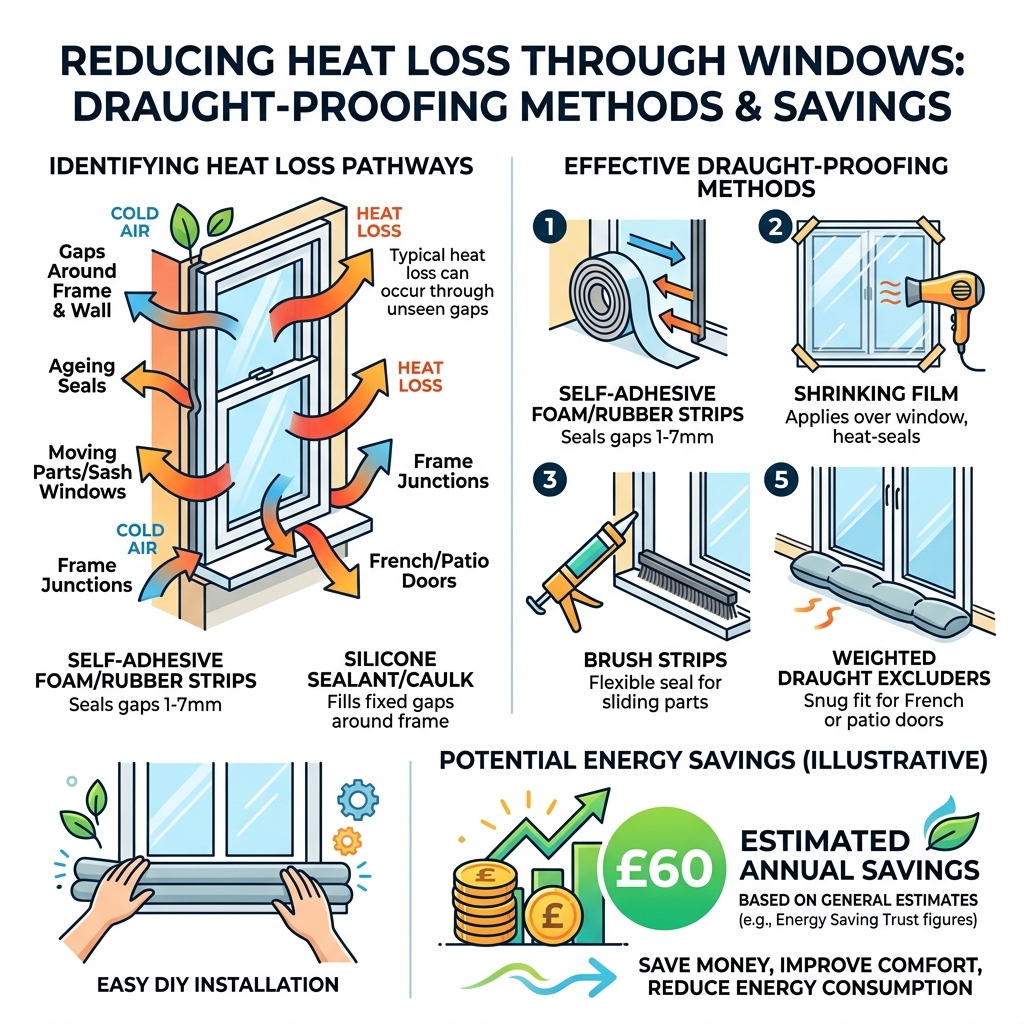
Quick answer: To seal window draughts, use one or more of these methods:
- Self-adhesive foam or rubber strips – press onto the window frame’s closing edge to seal gaps of 1-7mm
- Shrinking film – apply over the window with double-sided tape and heat-seal with a hairdryer
- Silicone sealant or caulk – fill fixed gaps between the frame and surrounding wall
- Brush strips – ideal for sliding or sash windows where moving parts need a flexible seal
- Weighted draught excluders – place against French windows or patio doors for a snug fit
Most of us don’t think about draughty windows until we’re sitting on the sofa in a jumper, heating cranked up, still shivering. The problem is almost invisible — cold air slips in through tiny gaps around window frames, ageing seals, and hairline cracks you’d never notice just by looking.
It’s not just older homes either. Modern properties can be just as leaky, especially as seals age and frames shift with temperature changes.
The financial case for fixing it is clear. According to the Energy Saving Trust, draught-proofing your windows and doors could save around £60 a year on energy bills. Not life-changing on its own — but it’s money back in your pocket for a job that often takes less than an afternoon.
This guide walks you through every method, from a £3 roll of self-adhesive tape to longer-lasting sealant fixes, so you can choose what works for your windows and your budget.
Before we start sticking foam everywhere, we need to find exactly where the enemy is breaking in. Draughts are sneaky; they don’t always come from where you think. While a massive crack in a window pane is obvious, most heat loss happens through tiny, invisible gaps in the frame or ageing insulation.
Here are the best ways we’ve found to hunt down those chilly breezes:
- The Candle or Lighter Test: This is the classic “detective” method. Close all your windows and doors to minimize internal air movement. Light a candle or a gas fire lighter and move it slowly around the edges of your window frames. If the flame flickers or dances, you’ve hit a draught.
- The Hand Method: Sometimes your skin is the best sensor. Dampen your hand slightly and run it along the seals and joints of the window. The moisture makes your skin more sensitive to moving air, helping you pinpoint exactly where the cold is entering.
- Curtain Movement: On a particularly windy day, take a look at your curtains or blinds. If they are gently swaying while the window is shut tight, you have a significant air leak.
- Visual Inspection: Look for daylight peeking through gaps in the frame or check for “witness marks”—dark lines of dust that accumulate where air is forced through a small opening.
Identifying these leaks is the first step in learning how to seal air leaks to save energy. Once you know where the gaps are, you can decide whether you need a simple window draught excluder strip or more robust insulated window treatments to keep the warmth in.
Choosing the Right Window Draught Excluder for Your Home
Not all windows are created equal, and neither are the solutions to fix them. Choosing the wrong material can lead to a window that won’t shut or a seal that peels off after a week. Generally, we look at the gap size and the window type (uPVC, wood, or metal) to decide on the best fit.
| Excluder Type | Best For | Gap Size | Durability |
|---|---|---|---|
| Foam Strips | Standard casement windows | 1-3mm | 1-2 years |
| EPDM Rubber | High-traffic windows/doors | 3-5mm | 5-10 years |
| Brush Strips | Sash or sliding windows | 1-7mm | 5+ years |
| Silicone/Caulk | Fixed gaps (non-moving) | Up to 6mm | 10+ years |
For many UK homes, a PVC draught excluder is a fantastic versatile option. These often feature a flexible polypropylene brush pile that can seal gaps up to 7mm, making them perfect for those slightly “wonky” older frames.
When exploring different energy saving methods for home insulation, rubber (like EPDM) is generally superior to foam because it springs back to its original shape after the window is opened. Foam tends to compress over time and lose its “squish,” eventually letting the draughts back in.
Installing Self-Adhesive Window Draught Excluder Strips
This is the most popular DIY fix because it’s fast and requires zero power tools. These strips come in various profiles: P-profile (for medium gaps), D-profile (for larger gaps), and E-profile (for small, even gaps).
Step-by-Step Installation:
- Clean the Frame: This is the most important step! If the frame is dusty or greasy, the adhesive won’t stick. Use soapy water or white spirits and let it dry completely.
- Measure Twice: Measure the length of the window’s closing edge. Cut the strip slightly longer than you think you need—you can always trim it, but you can’t stretch it.
- Apply with Pressure: Peel back the backing paper a few inches at a time. Press the strip firmly into the corner of the frame where the window closes against it.
- Seal the Corners: Ensure the strips meet tightly at the corners. Any gap here acts like a tiny tunnel for cold air.
- Test the Close: Close the window. It should feel slightly snugger, but you shouldn’t have to force the handle.
If you are looking for something more substantial for larger gaps or patio doors, a washable triangular draught excluder can be a great addition. These can be hooked onto the frame or door to move with it, providing a heavy-duty barrier against the cold.
Using Shrinking Film as a Window Draught Excluder
If you have single-glazed windows and your budget doesn’t stretch to new double glazing, shrinking film is your best friend. It acts as a form of “secondary glazing,” creating a pocket of still air that acts as a powerful insulator.
Installation Guide:
- Apply the provided double-sided tape to the window frame (not the glass).
- Measure and cut the film, leaving about an inch of excess on all sides.
- Press the film onto the tape, trying to keep it as straight as possible (don’t worry about wrinkles yet).
- Use a hairdryer on a medium heat setting. Move it back and forth across the film. Like magic, the film will shrink and become completely transparent and taut.
- Trim the excess film with a craft knife.
This is one of our favorite insulation tips for winter because it’s incredibly cheap and remarkably effective. It stops the “ice-box” effect of cold glass radiating chill into the room.
Permanent Fixes: Sealants and Caulk for Window Gaps
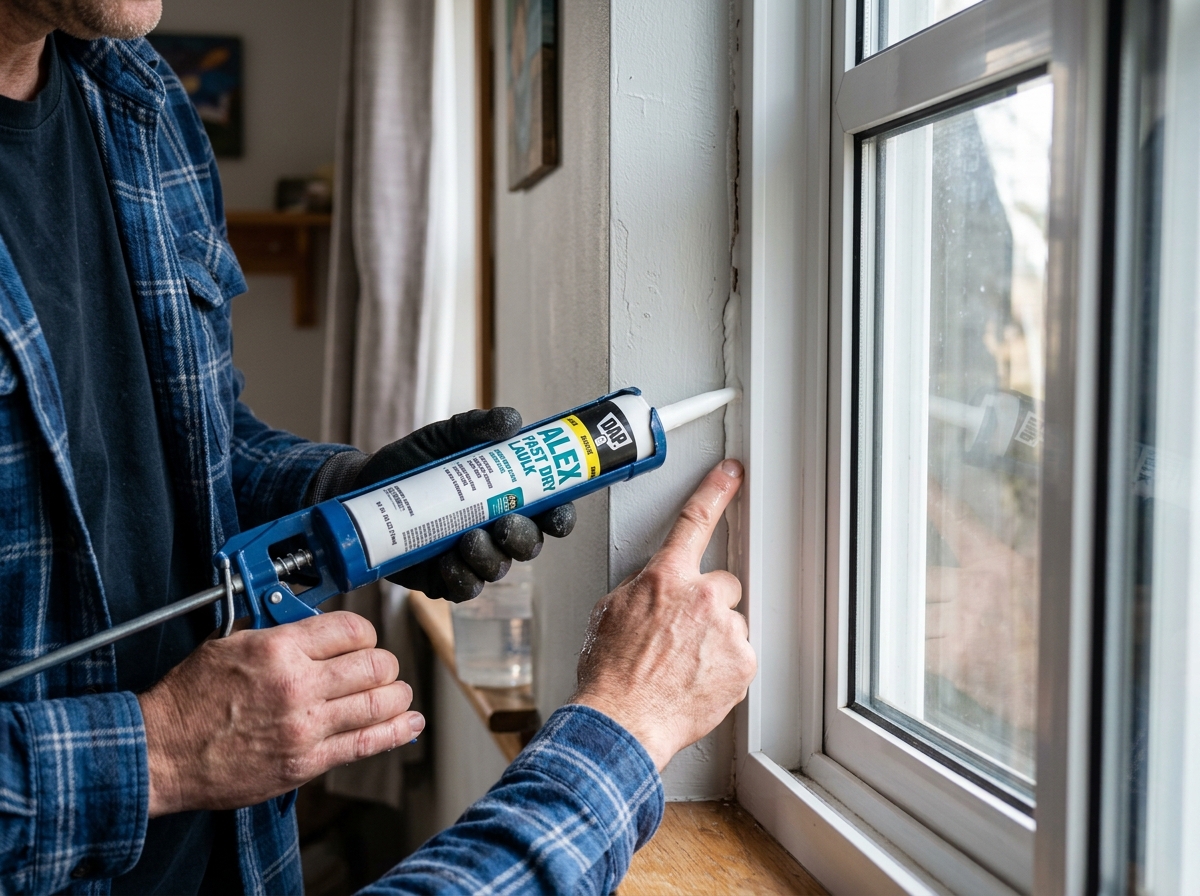
Sometimes the draught isn’t coming from the part of the window that opens. Often, it’s the gap between the window frame and the wall. This is where we put down the tape and pick up the sealant gun.
Silicone vs. Caulk:
- Silicone Sealant: This is flexible and waterproof. It’s the gold standard for uPVC windows and outdoor use. It won’t crack when the window frame expands and contracts in the sun.
- Caulk (Decorators’ Filler): This is better for internal gaps on wooden frames where you want to paint over the finish. It’s less flexible than silicone but much easier to “finish” for a clean look.
How to Apply Like a Pro:
- Preparation: Remove any old, peeling sealant with a scraper. Clean the area thoroughly.
- Masking: If you aren’t confident with a sealant gun, apply masking tape to the wall and the frame, leaving just the gap exposed.
- The 45-Degree Cut: Cut the nozzle of your sealant tube at a 45-degree angle. The opening should be roughly the same width as the gap you are filling.
- The Bead: Apply a continuous, steady bead of sealant along the gap.
- Smoothing: Dip your finger in a bit of soapy water (or use a smoothing tool) and run it along the bead to create a neat, concave finish.
- Tape Removal: Peel off the masking tape while the sealant is still wet to get a razor-sharp line.
Learning how to fix drafty uPVC windows with sealant can provide a permanent fix that lasts for a decade or more, significantly boosting your home’s thermal efficiency.
Essential Maintenance and Ventilation Safety
While we all want a warm home, there is such a thing as “too airtight.” Homes need to breathe to prevent damp, rot, and carbon monoxide build-up.
When you are applying a window draught excluder, you must be careful not to block “controlled ventilation.” This includes:
- Trickle Vents: Those small plastic vents at the top of uPVC windows. They are designed to let a tiny amount of air circulate to prevent condensation.
- Air Bricks: Often found in the lower walls of older houses to ventilate floorboards.
- Extractor Fans: Essential for removing moisture from kitchens and bathrooms.
If you seal every single gap and ignore ventilation, you’ll likely see condensation forming on your windows, which eventually leads to mould. The goal of insulating your home for energy efficiency is to stop unwanted draughts while maintaining necessary airflow.
Maintenance Tip: Check your seals every autumn. Self-adhesive foam can perish, and silicone can pull away from the wall. Removing old adhesive is easy with a bit of “sticky stuff remover” or white spirits, ensuring your new seals have a clean surface to bond to.
Frequently Asked Questions about Window Draught Proofing
How much money can I save by draught-proofing my windows?
According to the Energy Saving Trust, the average UK household can save around £60 a year by draught-proofing windows and doors. If you have an open chimney and add a chimney draught excluder, you could save another £90. Given that a roll of draught tape costs less than £5, the return on investment is almost immediate. Beyond the cash, the improved comfort—no more cold ankles!—is priceless. You can learn more about these savings in our guide to insulating your home for energy efficiency.
Can I use weighted excluders for windows?
Absolutely! While we usually think of “sausage” excluders for the bottom of doors, they are perfect for French windows, patio doors, or deep windowsills. A weighted stripe draught excluder filled with sand and polyester will sit snugly against the bottom rail of a large window, blocking the heavy cold air that “pours” off the glass. For a truly heavy-duty option, look for an extra thick triangular excluder which is specifically designed to stay in place and block light and sound as well as wind.
What is the best solution for sash windows?
Sash windows are notoriously difficult because the parts need to slide past each other. Standard foam tape will often get ripped off the first time you open the window. The best window draught excluder for sash windows is a brush strip. These have flexible bristles (pile) that maintain a seal even as the window moves. A twin draft guard can also be used for the bottom of the sash. If you have a significant gap, a weighted wind stopper placed along the meeting rail (where the two sashes meet in the middle) can work wonders.
Conclusion
Draught-proofing isn’t just about saving a few pounds on your bill; it’s about reclaiming your home from the winter chill. Whether you choose a quick-fix window draught excluder tape, a secondary glazing film, or a permanent silicone seal, the effort you put in now will pay off in comfort all season long.
At Financefyx, we believe that small, smart DIY changes are the best way to manage your household costs. By taking an afternoon to hunt down and seal those leaks, you’re taking a significant step toward a more sustainable, energy-efficient home. For more deep dives into keeping your house cozy, check out The Ultimate Guide to Insulating Your Home. Stay warm!
