
Most Energy Efficient Glass: Which One Wins?
Why Energy Efficient Glass for Windows Could Cut Your Heating Bills by 12%
Energy efficient glass for windows is one of the most effective upgrades a homeowner can make to reduce heat loss, lower energy bills, and eliminate cold drafts.
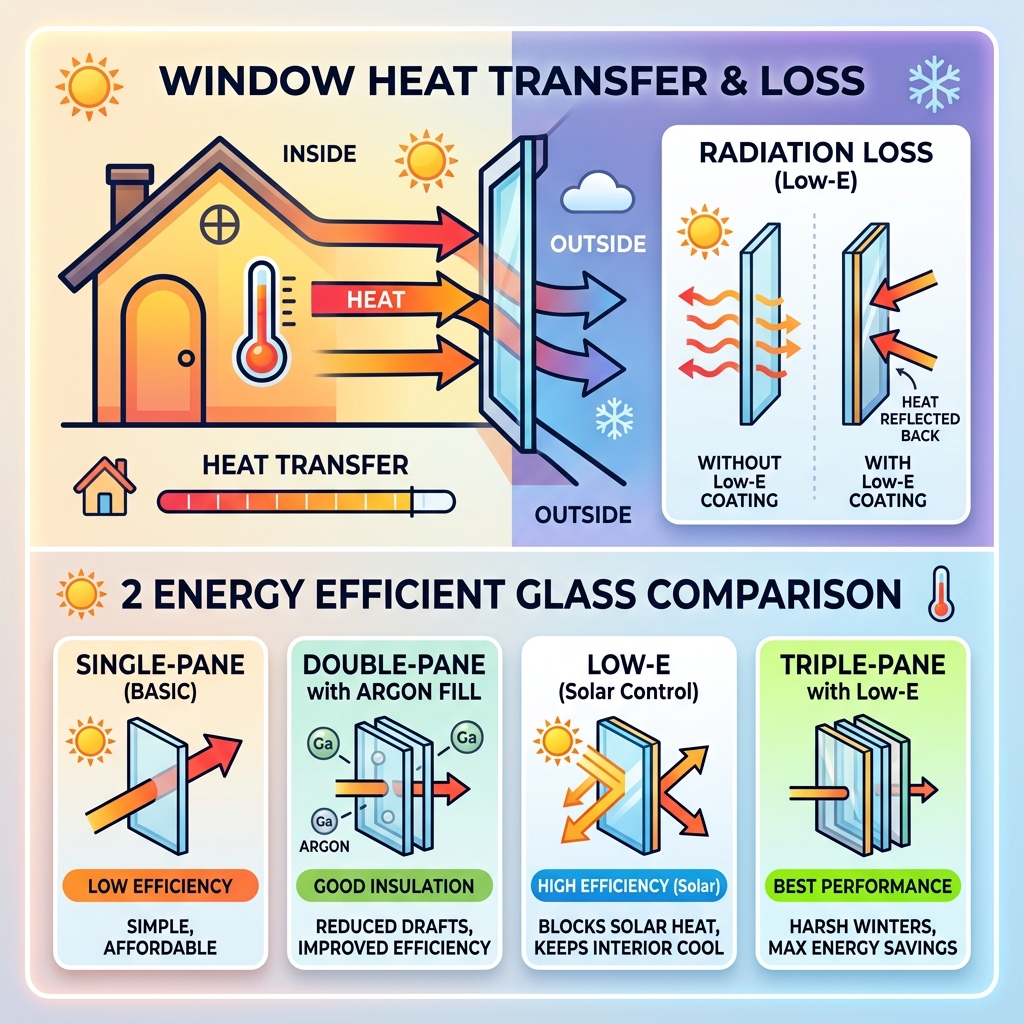
Here’s a quick summary of the most energy efficient glass options:
| Glass Type | Best For | Key Benefit |
|---|---|---|
| Passive Low-E (hard-coat) | Cold/northern climates | Traps heat inside, allows solar gain |
| Solar Control Low-E (soft-coat) | Mixed/hot climates | Blocks solar heat, reflects interior cool |
| Double-pane with argon fill | Most homes | Good insulation, affordable |
| Triple-pane with Low-E | Harsh winters | 2-3x more efficient than double-pane |
| Ultra-thin triple-pane (e.g., Corning Enlighten) | High-performance builds | Triple efficiency, lighter weight |
The numbers behind window heat loss are striking. Experts estimate that 70% of a home’s energy loss happens through windows and doors — and of that, 90% escapes through the glass itself, not the frame. Yet windows make up less than 10% of a home’s total surface area.
That’s a lot of heat leaving through a very small part of your house.
The good news? Switching to certified energy efficient glass can cut your household energy bills by an average of 12% annually. For many homeowners dealing with freezing winters and sky-high heating costs, that’s a meaningful saving.
This guide breaks down exactly how energy efficient glass works, which types perform best, and what to look for when choosing windows for your home.
The Core Components of Energy Efficient Glass for Windows
When we talk about energy efficient glass for windows, we aren’t just talking about a thicker piece of glass. Modern windows are highly engineered systems. To understand why one window outperforms another, we have to look at the microscopic level.
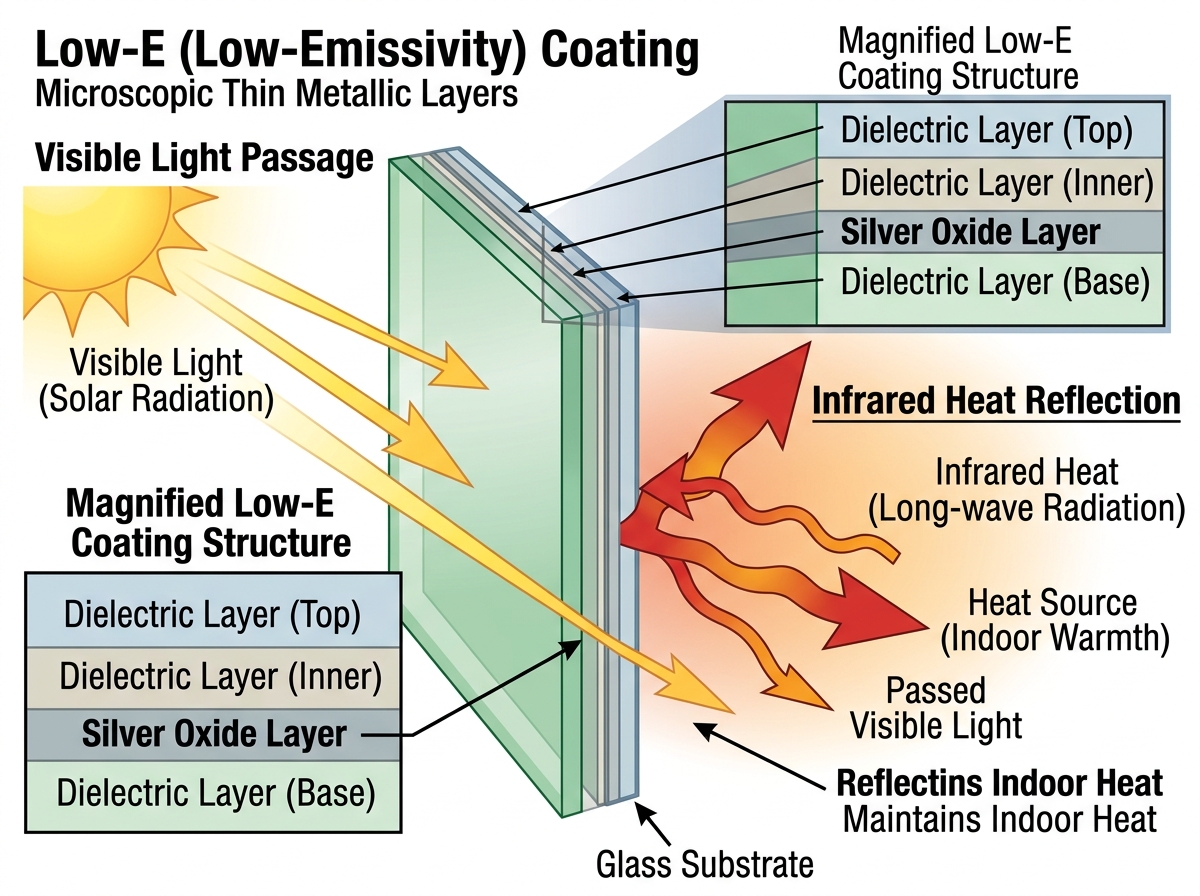
The most transformative element in modern glazing is the Low-Emissivity (Low-E) coating. If you’ve ever wondered why some windows seem to stay room-temperature even when it’s freezing outside, Low-E is likely the reason.
Low-E coatings are microscopically thin metallic layers—often silver or metal oxide—applied to the glass surface. These layers are so thin (about 500 times thinner than a human hair!) that they are virtually invisible to the naked eye, yet they act like a thermal mirror. They are designed to reflect long-wave infrared energy (heat) while allowing visible light to pass through.
Products like Low-e Window Glass | SOLARBAN® 70 by Vitro exemplify this technology, blocking nearly three-quarters of the sun’s heat while keeping your rooms bright. By reflecting radiant heat back to its source—keeping furnace heat inside during winter and sun heat outside during summer—these coatings drastically improve performance. Beyond just temperature control, these coatings provide vital ultraviolet (UV) protection, which prevents your expensive rugs and furniture from fading. For more ways to optimize your home’s envelope, check out our guide on how to Make Your Home Energy Efficient With These Tips.
Low-E Coatings, Gas Fills, and Multi-Pane Systems
To find the “winner” in the efficiency race, we have to compare the two main families of Low-E coatings: Passive (Hard-Coat) and Solar Control (Soft-Coat).
- Passive Low-E (Hard-Coat): Manufactured using a pyrolytic process where the coating is fused to the glass while it is still hot. It’s durable and allows some solar heat to enter the home, which is a massive plus in freezing climates. A prime example is SUNGATE ® 460, which insulates 46% better than standard clear glass.
- Solar Control Low-E (Soft-Coat): Applied using Magnetron Sputtering Vapor Deposition (MSVD) in a vacuum chamber. This coating is more delicate and must be sealed inside an insulated glass unit (IGU), but it offers superior U-values and better UV protection.
If you’ve noticed that your Patio Door Drafts make your living room feel like the Arctic, the issue might be a lack of these advanced coatings or the absence of insulating gas fills.
The Role of Gas Fills and Spacers
The “air” between your window panes isn’t usually just air. To maximize energy efficient glass for windows, manufacturers replace air with dense, inert gases:
- Argon: The most common choice. It is inexpensive, non-toxic, and significantly more viscous than air, which slows down the convection currents that carry heat across the gap.
- Krypton: Even denser than argon, making it the king of insulation for thin gaps (like those found in triple-pane windows).
Equally important are warm edge spacers. In the old days, windows used aluminum spacers to hold the glass panes apart. Because aluminum conducts heat, the edges of the window would get icy, leading to condensation and mold. Modern spacers use materials like silicone foam or structural polymers to create a “thermal break,” keeping the glass edges warm and dry.
| Feature | Double-Pane | Triple-Pane | Quadruple-Pane |
|---|---|---|---|
| Insulation Level | Standard Efficient | High Performance | Maximum Performance |
| Weight | Moderate | Heavy | Very Heavy |
| Typical U-Value | 0.25 – 0.30 | 0.15 – 0.20 | 0.10 – 0.12 |
| Best Use Case | Temperate Climates | Cold Climates | Arctic/Passive House |
Selecting Energy Efficient Glass for Windows by Climate
One size does not fit all. If we live in a northern climate, we want a “passive” glass like SUNGATE ® 400. This glass is designed to trap furnace heat inside while allowing the sun’s natural warmth to help heat the home during the day. It can trap winter heat up to 41% more effectively than standard glass.
Conversely, if we live in the South, we want “Solar Control” glass. This focuses on blocking the sun’s scorching rays to keep cooling costs down. Selecting the right glass is a cornerstone of Eco-Friendly Home Renovations to Save Energy.
Decoding Performance Metrics and Ratings
When shopping for energy efficient glass for windows, you will encounter a “nutrition label” for windows provided by the National Fenestration Rating Council (NFRC). Understanding these four numbers is the only way to truly compare products:
- U-Value (or U-Factor): This measures how well the window prevents heat from escaping. The lower the number, the better the insulation. Look for 0.30 or lower.
- Solar Heat Gain Coefficient (SHGC): This measures how much solar radiation enters through the glass. In hot climates, you want a low SHGC (0.25 or less). In cold climates, a higher SHGC can provide “free” heating.
- Visible Light Transmittance (VLT): This tells you how much natural light gets through. A higher number means a brighter room.
- Light to Solar Gain (LSG): This is the ratio between VLT and SHGC. It tells us how efficient the glass is at providing light without the heat.
Staying informed on these metrics helps you qualify for ENERGY STAR certification and potentially lucrative tax credits under the Inflation Reduction Act. These incentives are designed to reward homeowners who choose high-performance glazing. For those not ready for a full replacement, learning How to Seal Air Leaks to Save Energy is a great first step.
Innovations in Glass Technology and Comfort
The world of energy efficient glass for windows is evolving rapidly. One of the biggest complaints about triple-pane windows has always been their weight—they often require reinforced frames and heavy-duty hardware.
Enter Architectural Technical Glass (ATG). Innovations like Corning Enlighten use ultra-thin glass—sometimes less than a millimeter thick—as the center pane in a triple-pane unit. This allows for triple-pane efficiency (2-3x better than double-pane) at the weight and thickness of a standard double-pane window. These “thin-triple” units are up to 30% lighter, making them easier to install and compatible with existing frames.
Another leap forward is LightBridge next™ by Viridian Glass. This technology combines thermal efficiency with superior acoustic insulation. It uses a specially formulated laminate that can reduce outside noise by 29% compared to standard glass.
Fading Protection and the Tdw-ISO Metric
We often talk about UV protection, but UV is only part of the reason your furniture fades. Visible light also contributes to damage. The Tdw-ISO metric (Damage Weighted Transmittance) is a more comprehensive measure of fading risk. Advanced glass like Solarban 70 can block 94% of UV rays and significantly reduce the overall fading risk, keeping your interiors looking new for years.
Installation and Frame Synergy for Energy Efficient Glass for Windows
Even the world’s best glass won’t save you money if it’s sitting in a leaky frame.
- Vinyl Frames: Excellent insulation and moisture resistance. Look for multi-chambered frames filled with insulation.
- Fiberglass: The gold standard for durability. It expands and contracts at the same rate as glass, meaning the seals are less likely to fail over time.
- Wood: Naturally insulating and beautiful, but requires more maintenance.
- Operating Types: Casement and awning windows are generally more efficient than sliders because they press firmly against the weatherstripping when closed, creating a tighter seal.
If your current frames are in good shape but feel drafty, you might want to Stop the Chill with Easy Ways to Fix Drafty UPVC Windows before committing to a full glass replacement.
Frequently Asked Questions about Energy Efficient Glass
What is the difference between U-value and SHGC?
Think of the U-value as the window’s “insulation” (keeping indoor heat from escaping) and the SHGC as its “sunshield” (blocking outdoor heat from entering). In the North, prioritize a low U-value; in the South, prioritize a low SHGC.
Is triple-pane glass worth the extra cost?
In extreme climates (very cold or very hot), yes. Triple-pane windows are 20-50% more efficient than double-pane. They also provide significantly better noise reduction. However, in mild climates, the ROI may take longer to achieve compared to high-quality double-pane glass with advanced Low-E coatings.
How long do gas fills like Argon last in windows?
Most high-quality windows lose about 0.5% to 1% of their gas fill per year. Even after 20 years, the window should still have enough gas to remain highly effective, provided the seals remain intact. If you see fogging between the panes, the seal has failed, and the gas has escaped.
Conclusion
Choosing the most energy efficient glass for windows isn’t just about saving a few dollars on your monthly bill—it’s about transforming the way your home feels. No more “cold zones” near the windows in January, and no more sweltering “sun rooms” in July.
From the microscopic magic of Low-E coatings to the “thin-triple” glass from Corning, the technology available today can turn your home into a sanctuary of comfort and efficiency. While the upfront cost might be 10-15% higher than standard glass, the long-term energy savings and increased home value make it one of the smartest investments you can make.
At Financefyx, we believe that a more efficient home is a more comfortable home. Whether you are building from scratch or looking to upgrade your current space, prioritizing high-performance glazing is a “win” for your wallet and the planet.
