
Download Your Home Winterization Checklist PDF Before the Snow Hits
Why Winter Catches Most Homeowners Off Guard
A home winterization checklist PDF is the fastest way to make sure your home is ready before freezing temperatures arrive — and before costly damage has a chance to set in.
Here are the core tasks covered in a standard home winterization checklist:
- Inspect and service your heating system (furnace filter, HVAC tune-up)
- Seal drafts around windows, doors, outlets, and ducts
- Protect pipes by insulating them and knowing where your main shut-off valve is
- Clean gutters and downspouts to prevent ice dams and water damage
- Shut off and drain outdoor faucets and disconnect garden hoses
- Test smoke and carbon monoxide detectors
- Check your roof for damaged or missing shingles
- Set your humidifier to around 20% relative humidity indoors
- Trim overhanging tree branches near your roof or power lines
- Prepare snow removal tools and stock up on ice melt
Winter doesn’t give much warning. One cold snap and you’re dealing with burst pipes, sky-high heating bills, or a roof weighed down by snow. And floors alone can account for up to 10% of a home’s total heat loss — so even small gaps in your prep add up fast.
The good news? Most of this damage is completely preventable. A simple, printable checklist keeps you on track so nothing slips through the cracks.
The key is starting early — ideally in early fall, before the first frost hits your area.
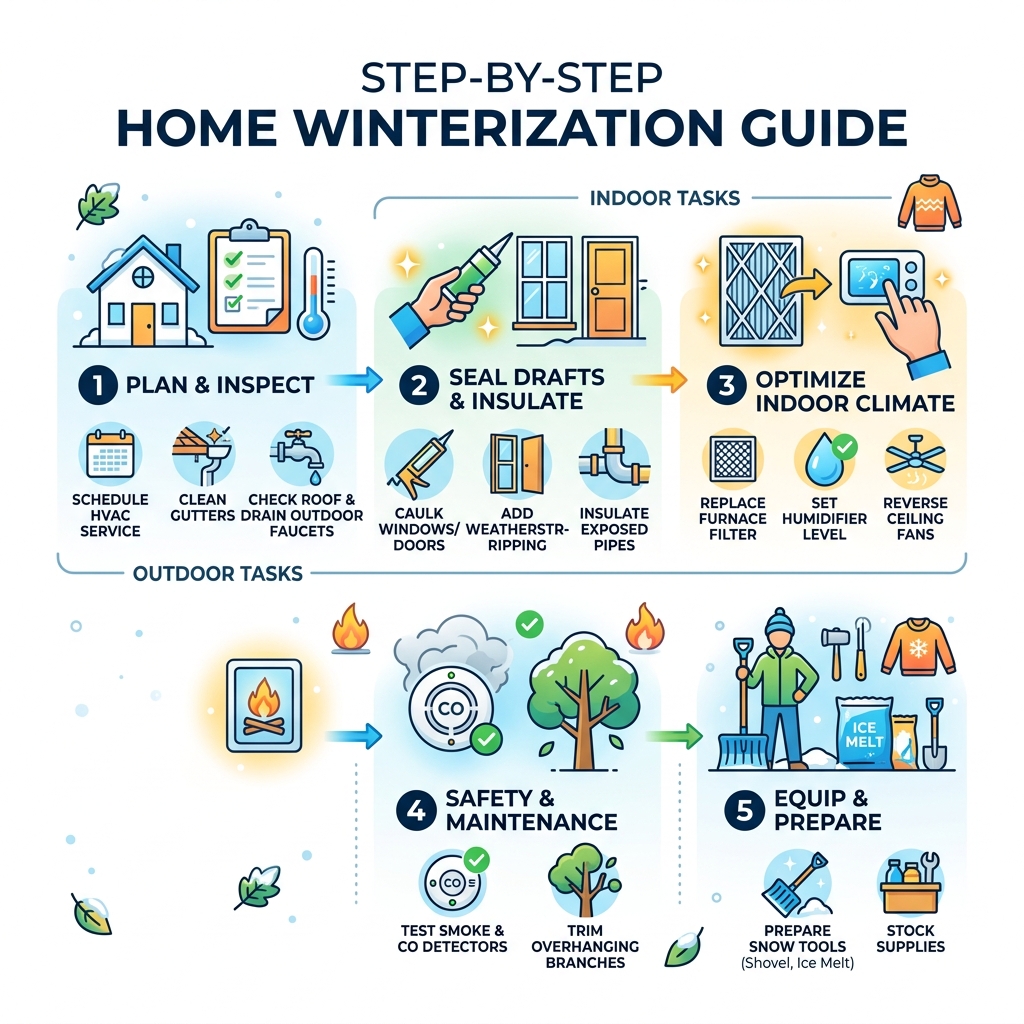
Home winterization checklist pdf terms made easy:
Why You Need a Home Winterization Checklist PDF
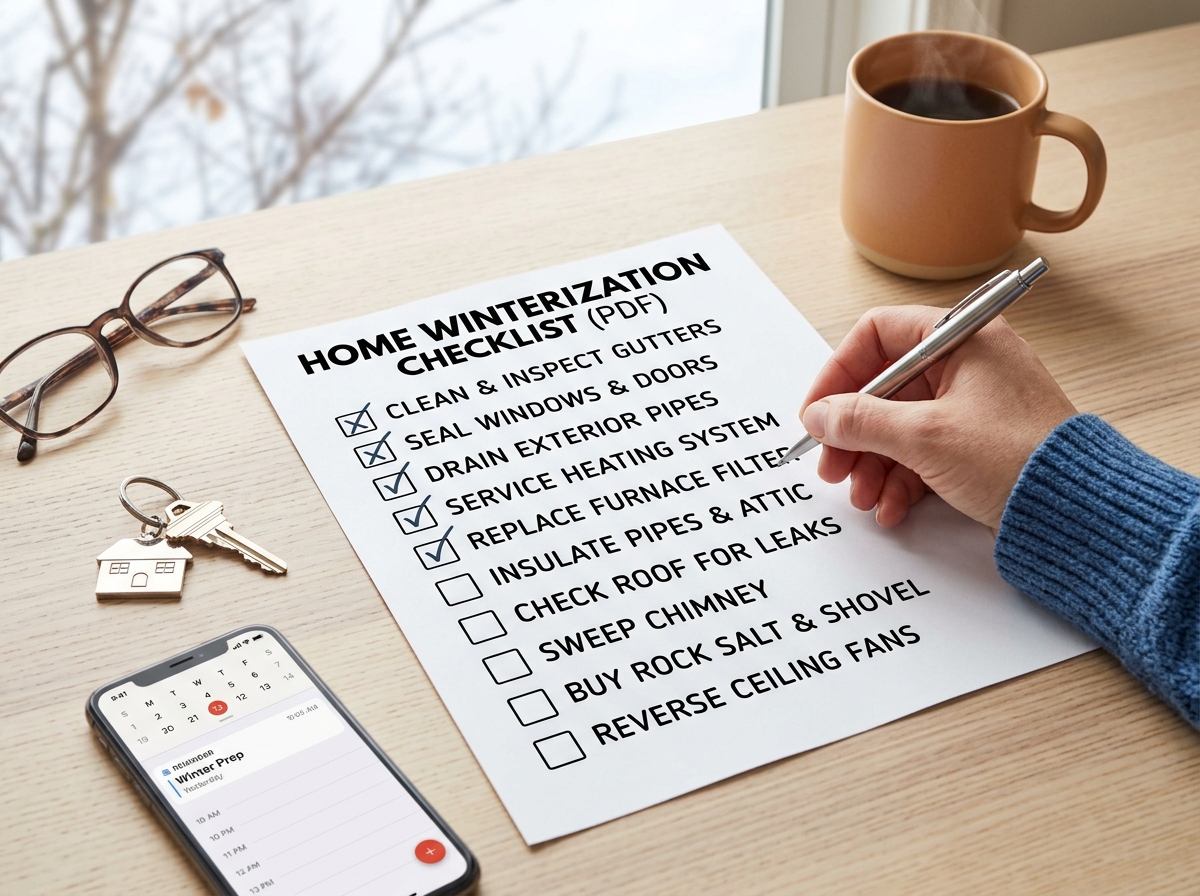
When the first flurry of snow hits the window, it’s usually too late to start thinking about your insulation. We’ve found that the most successful homeowners treat winterization as a proactive ritual rather than a reactive scramble. Using a home winterization checklist PDF ensures that you don’t miss the small details that lead to big bills.
Did you know that floors can account for as much as 10% of heat loss in a house? Without a structured guide to winterizing a house checklist, it’s easy to forget about the drafts creeping in from the crawl space or the gaps under the floorboards.
Beyond just staying warm, winterization is about risk management. Frozen pipes that burst can cause thousands of dollars in water damage in a matter of minutes. By following a printable guide, you are essentially creating an insurance policy for your property. Early fall is the “sweet spot” for these tasks—the weather is still mild enough to work outdoors, but the urgency of the coming season provides the necessary motivation.
Essential Indoor Steps for Winter Preparation
The interior of your home is your sanctuary during the winter, but it requires some mechanical TLC to stay that way. The heart of your winter comfort is your HVAC system. A dirty or clogged furnace filter limits airflow, forcing your system to work harder and increasing your energy bills. We recommend inspecting and replacing these filters at the start of the season and then monthly throughout the winter.
To truly boost your winter energy efficiency, consider upgrading to a programmable thermostat. This allows you to drop the temperature automatically when you’re sleeping or away, saving significant money over the season. Another “pro tip” is to reverse the direction of your ceiling fans. Switching the rotation to clockwise at a low speed creates an updraft that pushes the warm air trapped at the ceiling back down into the living space.
Safety is also paramount. Because we keep our homes sealed tight in winter, the risk of carbon monoxide poisoning increases, especially in homes heated by gas or oil.
- Smoke Detectors: Test them monthly and replace batteries bi-annually.
- Carbon Monoxide Detectors: Ensure they are installed near sleeping areas and replace batteries annually.
- Humidifier Settings: To prevent window condensation while keeping your skin from drying out, set your relative humidity to around 20%.
Essential Indoor Steps for Your Home Winterization Checklist PDF
One of the most satisfying parts of your home winterization checklist pdf is hunting down drafts. If your living room feels like the Arctic, you likely have air leaks. You can fix drafty windows using simple weather stripping or caulking to seal gaps.
Don’t forget the hidden areas:
- Attic Insulation: Heat rises, and if your attic isn’t properly sealed, you’re literally heating the neighborhood. Use this attic insulation guide to check for gaps around pipes and hatches.
- Crawl Spaces: Uninsulated crawl spaces are a major source of cold floors. Following a crawl space insulation DIY roadmap can help you block those icy drafts from the ground up.
- Outlets and Switches: Cold air often leaks through electrical boxes on exterior walls. Simple foam gaskets installed behind the faceplates can make a surprising difference.
Critical Outdoor and Plumbing Tasks
Moving outside, your primary goal is to manage water and ice. Clogged gutters are the leading cause of ice dams—ridges of ice that form at the edge of the roof and prevent melting snow from draining. This water then backs up under your shingles and leaks into your ceilings.
Clean your gutters in late fall after the last leaves have dropped. Ensure your downspouts extend several feet away from the foundation to prevent basement flooding. While you’re up there, perform a quick roof inspection. Look for missing, curling, or damaged shingles, especially on sections that get the most sun, as these are most prone to wear.
Finally, prepare for the snow itself.
- Tree Trimming: Trim branches away from power lines and your roof. Heavy snow or ice can cause limbs to snap, leading to property damage or power outages.
- Equipment Prep: Drain the gas from your lawnmower and ensure your snowblower is serviced.
- Supplies: Stock up on sand or pet-safe ice melt before the first big storm hits and the stores run out.
Protecting Pipes and Outdoor Faucets
Plumbing is perhaps the most vulnerable part of any home during a freeze. Hot water pipes actually tend to freeze faster than cold ones, so don’t assume your water heater protects you!
First, locate your main water shut-off valve and ensure everyone in the house knows how to use it. If a pipe bursts, every second counts. For outdoor protection, disconnect all garden hoses and drain the “hose bibs” (outdoor faucets). If you have an underground sprinkler system, you must blow out the lines with an air compressor to prevent the plastic pipes from shattering underground.
For pipes in unheated areas like garages or basements, use insulation tips for winter such as foam sleeves or fiberglass wrap. In extreme climates, you might even consider “heat tape”—an electrical cable that warms the pipe—but always follow safety guidelines to avoid fire hazards.
Special Considerations for Vacant and Mobile Homes
Winterizing a home you live in is one thing; winterizing a property that will sit empty is a different beast entirely. Whether it’s a vacation cabin or a mobile home, the lack of running water and consistent internal heat makes these properties high-risk.
| Task | Occupied Home | Vacant/Mobile Home |
|---|---|---|
| Thermostat | Comfort levels (68°F+) | Minimum 55°F to prevent freezing |
| Water Supply | Main valve remains ON | Main valve OFF; pipes drained |
| Appliances | Regular use | Cleaned, dried, and doors left open |
| Plumbing | Insulate exposed pipes | Add non-toxic antifreeze to traps/toilets |
| Security | Standard locks/alarm | Notify police; forward mail |
Mobile homes have unique vulnerabilities because their plumbing is often located in a “wet belly” or crawl space that is highly susceptible to wind chill. Ensure your skirting is intact and free of holes, as this skirting acts as the primary windbreak for your pipes.
Using Your Home Winterization Checklist PDF for Seasonal Rentals
If you are leaving a property vacant, your home winterization checklist pdf should include steps to “dry out” the house. After turning off the main water, open every faucet to let the remaining water drain out. Flush the toilets to empty the tanks and bowls.
To prevent sewer gases from entering the home while the water traps are dry, pour a small amount of non-toxic (biodegradable) antifreeze into the toilet bowls and sink drains. This also prevents any tiny amounts of remaining water from freezing and cracking the porcelain. Don’t forget to unplug non-essential electronics and remove any food that might attract pests during the quiet winter months.
Frequently Asked Questions about Home Winterization
When should I start winterizing my home?
The best time is early fall. You want to complete outdoor tasks-like gutter cleaning and roof repairs-while the weather is still dry and safe for ladder work. Once the ground freezes, it’s much harder to deal with irrigation systems or foundation repairs.
Can I winterize my house myself or should I hire a pro?
Many tasks on a home winterization checklist pdf are DIY-friendly, such as installing weather stripping or changing filters. However, we recommend hiring a professional for:
- HVAC Tune-ups: A technician can check for carbon monoxide leaks and ensure the heat exchanger is intact.
- Chimney Sweeping: If you use a fireplace, a professional cleaning is essential to prevent chimney fires.
- Roof Repairs: If you have steep pitches or significant damage, safety should come first.
If you want an official source for cold-weather home safety and freeze preparedness, the American Red Cross winter storm safety guide is a helpful external reference.
What is the most important step to prevent frozen pipes?
Knowing the location of your main water shut-off valve is the single most important safety step. Beyond that, maintaining a minimum interior temperature of 55°F and insulating pipes in unheated areas are the best ways to prevent the freeze from happening in the first place.
Conclusion
Preparing your home for winter doesn’t have to be an overwhelming chore. By breaking it down into manageable steps with a home winterization checklist pdf, you can protect your property’s longevity and your own financial peace of mind. From sealing attic gaps to simply reversing a ceiling fan, these small actions lead to a safer, warmer, and more efficient home.
Ready to dive deeper into making your home more efficient? Check out our category for more energy saving tips to keep your wallet as warm as your living room this season. Stay safe, stay warm, and get ahead of the frost!
