
The Real Price of Protecting Your Home’s Exterior Walls
Why Insulating Exterior Walls Price Matters More Than You Think
Insulating exterior walls price typically ranges from $1 to $5 per square foot installed, or roughly $1,500 to $8,500 for a typical home’s exterior walls — depending on materials, home size, and whether walls are open or finished.
Here’s a quick snapshot of what most homeowners pay:
| Project Scope | Typical Cost Range |
|---|---|
| Per square foot (installed) | $1 – $5 |
| Small project (~500 sq ft) | $500 – $2,000 |
| Average home (~1,500 sq ft walls) | $1,500 – $6,000 |
| Injection foam (all exterior walls) | $4,800 – $10,300 |
| Full project average | $2,400 |
If your heating bills keep climbing and certain rooms never seem to warm up, your exterior walls may be the culprit. Most homes lose a significant amount of heat straight through uninsulated or poorly insulated walls — and that heat loss shows up directly on your energy bill every single month.
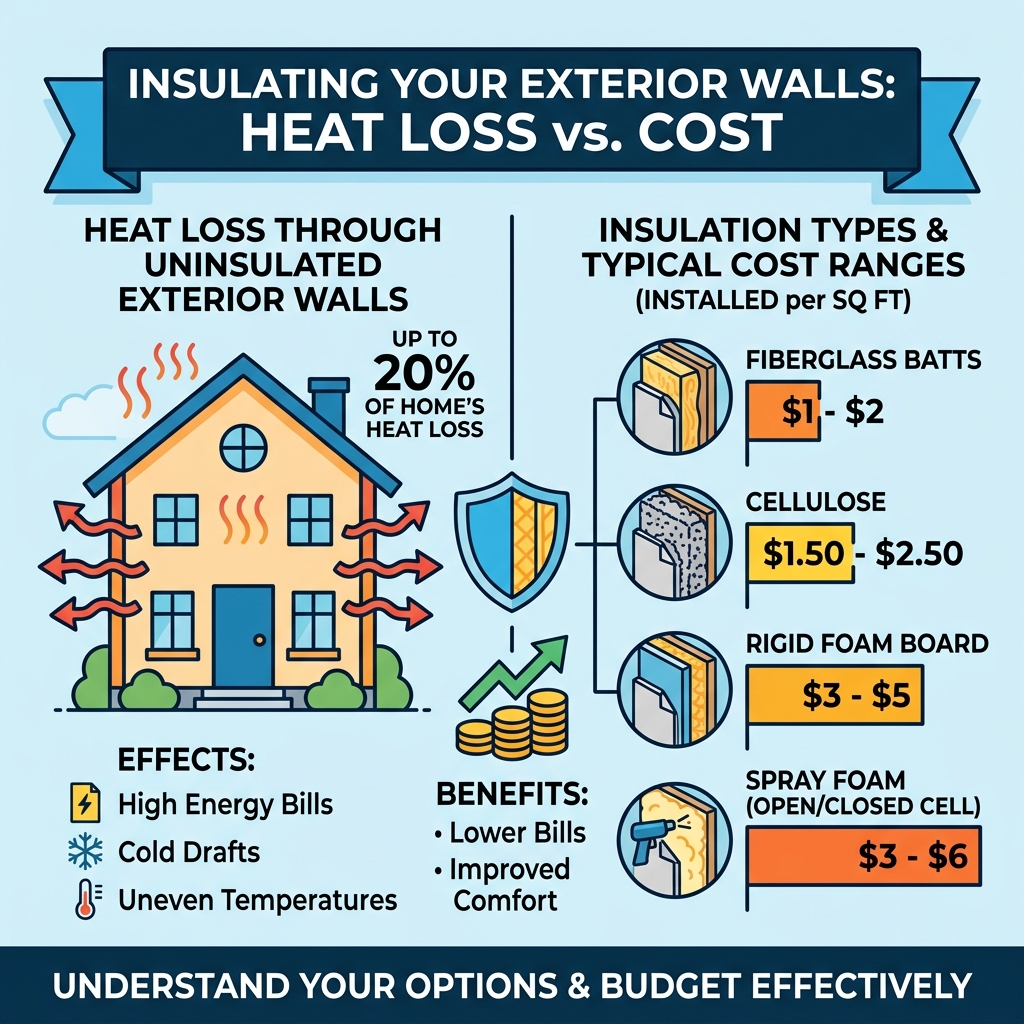
The good news? Properly insulated exterior walls can cut your energy bills by up to 20%. That’s real money back in your pocket every year.
But before you commit to a project, it helps to understand exactly what drives the cost — because the range is wide. A basic batt insulation job on a new construction home looks very different, price-wise, from injecting foam into the existing walls of an older house with brick siding.
This guide breaks it all down so you can budget with confidence.
Understanding the Average Insulating Exterior Walls Price
When we talk about the insulating exterior walls price, we aren’t just looking at a single number. The national average sits around $2,400, but projects can swing from a low of $1,150 to a high of $6,000 or more. If you are opting for premium solutions like high-end injection foam for a large multi-story home, that price can climb toward $10,000.
The most accurate way to estimate your project is by looking at the square footage of your exterior walls. A typical home has approximately 1,500 square feet of exterior wall space. At a rate of $1.87 to $3.03 per square foot for standard materials and labor, you can see how the math starts to add up.
National Averages and Project Scope
The scope of your project is the biggest “price dial.” Are you just topping off a drafty north-facing wall, or are you doing a full-house retrofit?
- Small Projects (500 sq ft): Expect to pay between $500 and $2,000.
- Medium Projects (1,200 sq ft): Costs usually range from $1,200 to $4,800.
- Large Projects (2,000+ sq ft): These can reach $8,500 or higher depending on the material.
Material Cost Comparison
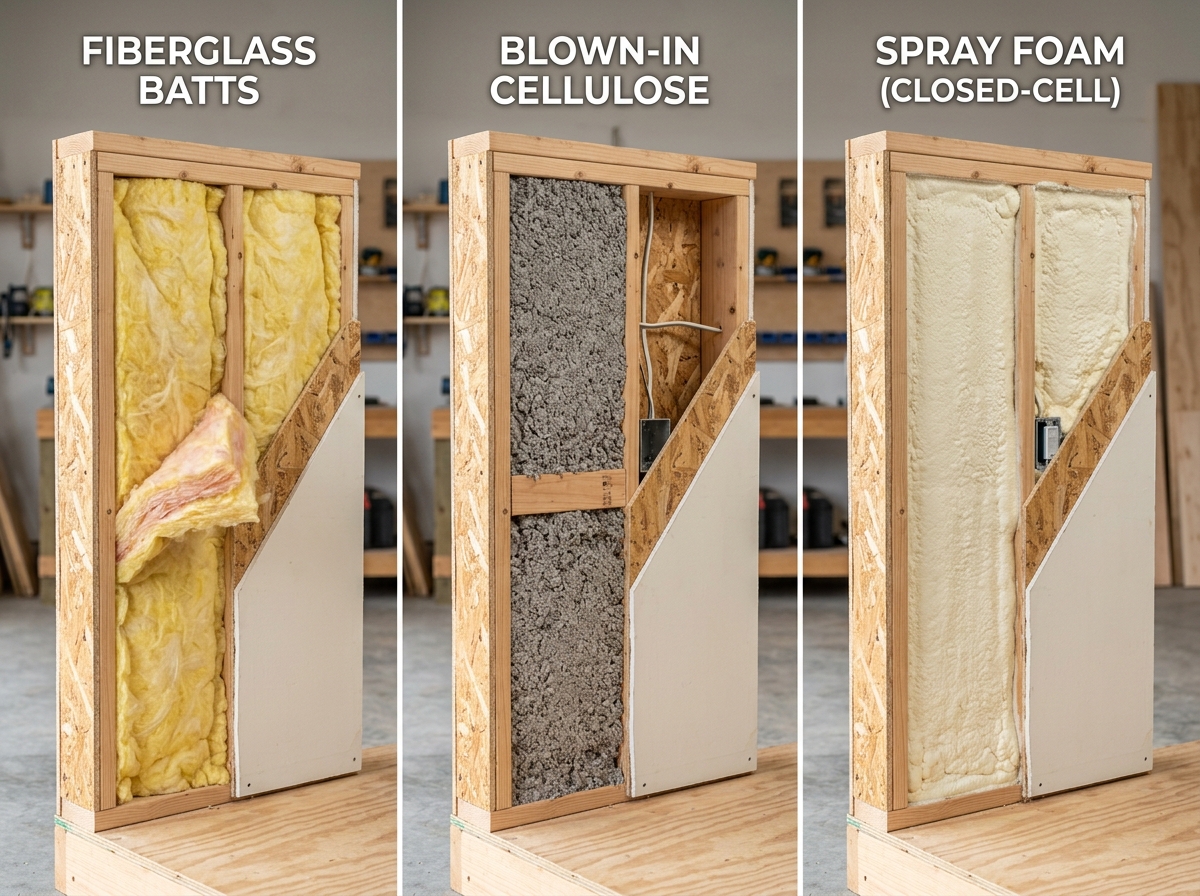
The material you choose dictates the R-value (the measure of thermal resistance) and the final bill. Here is how they stack up per square foot:
| Material Type | Material Cost (per sq ft) | Total Installed Cost (per sq ft) |
|---|---|---|
| Fiberglass Batts | $0.30 – $1.50 | $1.00 – $2.50 |
| Blown-in Cellulose | $0.60 – $1.20 | $1.25 – $2.50 |
| Rigid Foam Board | $0.75 – $2.00 | $2.50 – $5.00 |
| Spray/Injection Foam | $1.50 – $4.50 | $3.15 – $7.50 |
For more details on how these upgrades impact your home’s performance, check out our guide on insulating your home for energy efficiency.
Cost Breakdown by Insulation Material and Type
Choosing the right material is a balancing act between your budget and your climate’s demands. Each material has a different “thermal personality.”
- Fiberglass Batts: These are the classic “pink” rolls. They are affordable and easy to install in open walls, but they don’t stop air leaks.
- Mineral Wool: Often called Rockwool, this is a denser, fire-resistant alternative to fiberglass. It’s great for soundproofing but comes at a higher price point.
- Cellulose: Made from recycled paper treated with fire retardants, this is a favorite for “drill-and-fill” retrofits because it packs tightly into wall cavities.
- Rigid Foam Board: Often used on the exterior side of the wall sheathing during a siding replacement, this provides a continuous thermal bridge.
To see how these materials perform under pressure, read a comprehensive thermal insulation comparison and our insulation thermal conductivity comparison for beginners.
Spray Foam and Injection Insulating Exterior Walls Price
If you want the “Gold Standard,” you’re looking at foam.
- Open-Cell Foam: This is lighter and expands significantly. It’s excellent for sound dampening and fills every nook and cranny.
- Closed-Cell Foam: This is much denser and acts as both an air and vapor barrier. It has the highest R-value per inch (around R-6 to R-7), making it the most expensive but most effective choice.
- Injection Foam: This is a specialized product designed to be pumped into closed wall cavities. It doesn’t expand with the same force as spray foam, so it won’t pop your drywall off the studs. The insulating exterior walls price for a full-house injection foam project typically ranges from $4,800 to $9,600.
Blown-in and Batt Insulating Exterior Walls Price
For those on a tighter budget, blown-in and batt insulation offer a solid ROI.
- Fiberglass Batts: Costing as little as $0.30 per square foot for materials, these are the go-to for DIYers. However, if you are retrofitting an existing wall, you’ll have to tear down the drywall first, which can add $1.50 to $3.00 per square foot in labor and repair costs.
- Blown-in Cellulose: This is the middle ground. It provides better coverage than batts because it flows around wires and pipes. It’s a fantastic way to stop the draft with these exterior wall insulation choices.
Key Factors Influencing Your Total Project Cost
Why does one neighbor pay $3,000 while another pays $7,000? It often comes down to the “anatomy” of the house.
Siding Type: The Hidden Price Driver
If you are insulating from the outside, your siding material is the biggest factor in labor costs.
- Vinyl and Aluminum: These are the easiest to work with. Professionals can often unzip the siding, drill holes, and snap the siding back into place with minimal evidence.
- Brick: This requires drilling through mortar joints. Once the insulation is in, the holes must be filled with matching mortar. This is labor-intensive and increases the price.
- Wood Siding: This requires precision. Holes are drilled, then plugged with wood bungs that must be sanded and painted to match.
Home Height and Accessibility
A single-story ranch is a breeze. A three-story Victorian with steep gables and immovable landscaping? Not so much. If a crew needs specialized scaffolding or high-reach ladders, expect the labor portion of your insulating exterior walls price to increase by 10% to 20%.
When working in areas prone to moisture, like bathrooms or kitchens, you need to be extra careful. Learn about the best insulation to use between studs in your wet zones to avoid mold issues.
New Construction vs. Retrofitting Existing Walls
Timing is everything.
- New Construction: This is the cheapest time to insulate. The wall cavities are open, meaning a crew can fly through the house stapling batts or spraying foam. Costs stay low, ranging from $0.65 to $6.50 per square foot.
- Retrofitting: This is more complex. You are either removing drywall (expensive and messy) or using the “drill-and-fill” method. Retrofit costs usually land between $1.75 and $7.50 per square foot.
For those living in historic properties, our guide on old house new warmth: a guide to modern insulation is a must-read.
Hidden Expenses and Potential Savings
The “sticker price” isn’t always the final price. We always recommend homeowners set aside a 10% “surprise fund” for these common add-ons:
- Permits: Depending on your city, a building permit can cost anywhere from $50 to $250.
- Site Preparation: Moving furniture, clearing exterior landscaping, and protecting floors can take hours. Some companies charge $50 to $100 per hour for this prep work.
- Hazardous Materials: If your home was built before 1978, there’s a risk of lead paint or asbestos. Asbestos removal can cost between $1,190 and $3,255. If you find mold during the process, remediation can add $1,225 to $3,750 to your bill.
Don’t let these numbers scare you away from a “vintage” dream. You can stop burning money and start insulating your vintage home with the right planning.
Rebates, Tax Credits, and Long-Term ROI
This is where the news gets good. Under the Inflation Reduction Act, homeowners can claim a federal tax credit of up to 30% of the material costs, capped at $1,200 annually.
Additionally, many local utility companies offer rebates ranging from $50 to $1,100 because they would rather you use less energy than have to build new power plants. When you combine these incentives with the roughly 20% savings on your monthly energy bills, most insulation projects pay for themselves in 5 to 7 years. For broader background on home weatherization and insulation basics, the U.S. Department of Energy offers helpful guidance at Energy Saver.
Explore more energy-saving methods for home insulation to maximize your return.
Frequently Asked Questions about Exterior Wall Insulation
Can I insulate existing walls without removing drywall?
Yes! This is the most common question we hear. Using the “drill-and-fill” method, technicians drill small holes (about 2 inches in diameter) either through your exterior siding or from the inside. They then inject foam or blow in cellulose until the cavity is full. Afterward, they plug the holes and patch the surface. It is far cleaner and more cost-effective than a full remodel.
How long does the installation process take?
For an average-sized home, a professional crew can usually finish the job in 3 to 5 hours. If the project is complex—such as a large brick home or one requiring extensive drywall repair—it may take 1 to 2 days.
Hiring the right team is key to a smooth timeline. Read the hot truth about hiring a county insulation company for your home to ensure you’re getting quality service.
Is DIY insulation cheaper than hiring a professional?
On paper, yes. You can save the $0.25 to $2.50 per square foot that pros charge for labor. However, DIY is only recommended for installing fiberglass batts in open walls.
For existing walls, you need specialized blowers or foam injection rigs that are expensive to rent and difficult to operate. If you mess up a foam injection, you could literally bow your walls out or leave massive gaps that lead to mold. For most, the peace of mind (and the warranty) offered by a pro is worth the extra cost. For a deeper dive, see the ultimate guide to insulating your home.
Conclusion
Determining the insulating exterior walls price is the first step toward a more comfortable, valuable, and efficient home. While an average cost of $2,400 to $5,000 might seem like a significant upfront investment, the combination of immediate comfort, reduced noise, and a 20% drop in energy bills makes it one of the smartest home improvements you can make.
At Financefyx, we believe in making home maintenance transparent. We recommend starting with a professional energy audit to see exactly where your home is leaking air. From there, get at least three itemized quotes from reputable contractors to compare material choices and labor rates.
Ready to take the next step? Check out our The Ultimate Guide to Insulating Your Home for everything you need to know about protecting your sanctuary.
