
The Cold Hard Truth About Exterior Wall Insulation Costs
Understanding Average Exterior Wall Insulation Costs
When we look at the big picture, the average cost to install insulation in a 2,000-square-foot home typically lands between $3,000 and $10,000. This range is wide because every home has a different “thermal envelope.” If you are just focusing on the walls themselves, the average project cost is approximately $2,400, though it can swing from $1,150 to $6,000 depending on the complexity.

A major driver of exterior wall insulation costs is the R-value. In home efficiency, R-value measures how well a material resists heat flow. The higher the number, the better the insulation. Depending on where you live, building codes might require an R-13 to R-15 for 2×4 walls, or up to R-21 for 2×6 walls. Meeting these higher standards in colder climates will naturally push your budget toward the higher end of the scale.
For a deeper dive into how these systems work, check out our guide on insulating-your-home-for-energy-efficiency.
Comparing Exterior Wall Insulation Costs per Square Foot
To get a precise estimate, we usually talk in terms of square footage. On average, you’re looking at $1.50 to $5.00 per square foot for the total project, which includes both the “stuff” (materials) and the “sweat” (labor). However, the material you choose is the biggest variable.
| Material Type | Cost per Sq. Ft. (Materials) | Typical R-Value (per inch) |
|---|---|---|
| Fiberglass Batts | $0.30 – $1.50 | 2.2 – 2.9 |
| Cellulose (Blown-in) | $0.60 – $2.30 | 3.2 – 3.8 |
| Mineral Wool | $1.00 – $2.00 | 3.0 – 3.3 |
| Rigid Foam Board | $0.25 – $2.00 | 3.6 – 5.0 |
| Spray Foam (Closed Cell) | $1.00 – $2.50 | 6.0 – 7.0 |
As you can see, there is a direct correlation between price and performance. While fiberglass is the budget-friendly classic, spray foam offers nearly double the heat resistance per inch, which is why its exterior wall insulation costs are higher. For a head-to-head matchup of these materials, see our comprehensive thermal insulation comparison.
How Siding Affects Exterior Wall Insulation Costs
If you are insulating an existing home from the outside, your siding isn’t just decoration—it’s the gatekeeper. The type of exterior skin your home wears significantly changes the labor involved.
- Vinyl Siding: This is the “easy mode” of insulation retrofitting. Installers can often unzip the panels, drill their access holes, and snap the siding back into place without a trace.
- Aluminum Siding: This is trickier because aluminum is prone to denting and bending. It requires a gentle touch, which can add to the hourly labor rate.
- Brick Masonry: To insulate behind brick, pros have to drill through the mortar joints. Afterward, they must mix custom mortar to match your existing wall. This is labor-intensive and typically sits at the “Premium” end of the price scale.
- Wood Shingles/Siding: Wood requires face-drilling. Once the insulation is in, the holes are plugged with tapered wood plugs and painted to match.
Industry estimates suggest that complex siding types can add 7% to 15% to your total bill due to the specialized repair work needed.
Breaking Down Costs by Material and Method
Choosing the right material is a balance between your budget and your home’s physical constraints. We often categorize these into four main groups: batts, blown-in, spray foam, and rigid board.
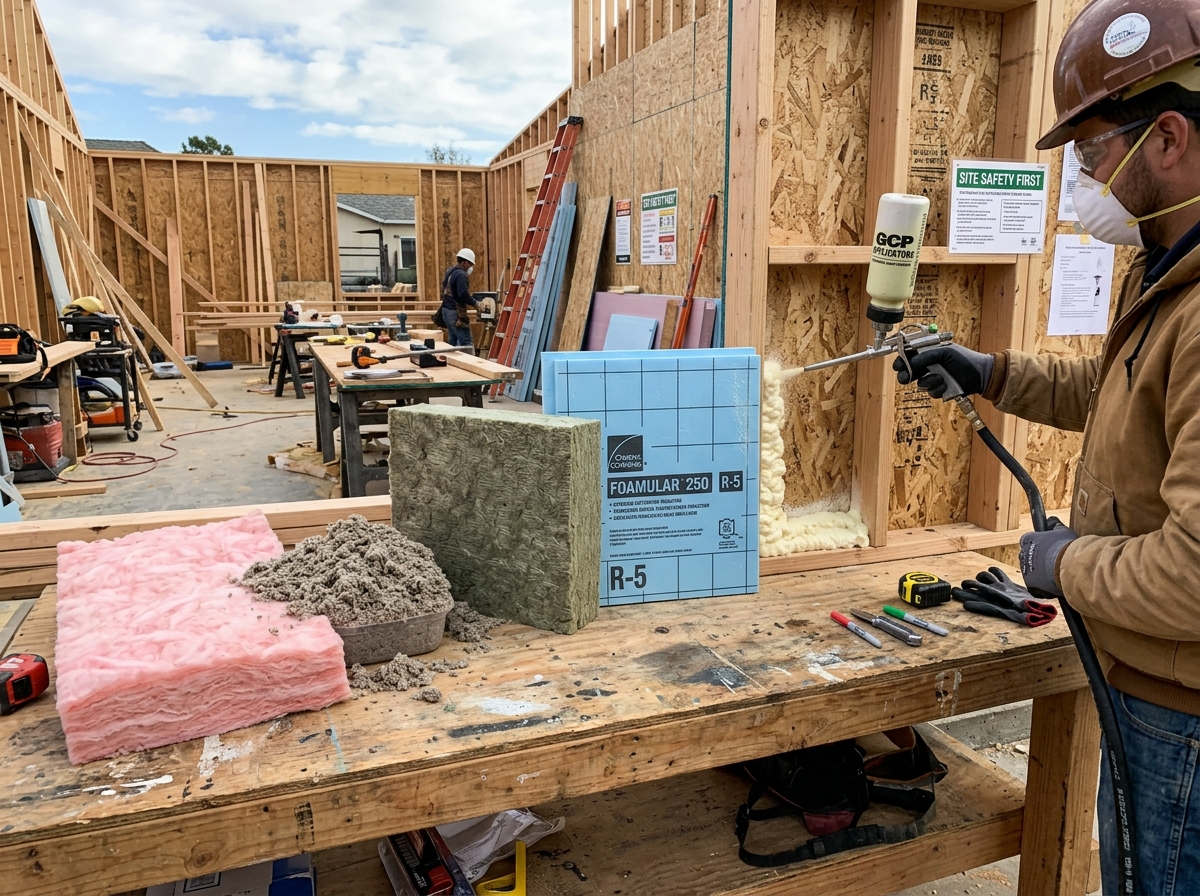
Fiberglass batts are the large, fluffy blankets you see in new construction. They are incredibly cost-effective but only work if the wall cavities are wide open. If you’re trying to understand the science behind why some materials feel warmer than others, our guide on insulation-thermal-conductivity-comparison-for-beginners explains it in plain English.
Price Ranges for Popular Insulation Types
Let’s look at the “real world” numbers for the most common choices:
- Fiberglass Batts ($0.65 – $2.00 per sq. ft. installed): The go-to for DIYers and new builds. It’s affordable and easy to handle. If you’re considering a hands-on approach, don’t miss the ultimate DIY guide to mastering batt insulation.
- Blown-In Cellulose/Fiberglass ($1.65 – $3.80 per sq. ft. installed): This involves “blowing” loose material into wall cavities. It’s excellent for retrofitting older homes because it fills the nooks and crannies that batts can’t reach.
- Spray Foam ($3.15 – $7.50 per sq. ft. installed): The gold standard for air sealing. It expands to fill every gap, creating an airtight barrier. While expensive, it offers the highest R-value.
- Injection Foam ($5,150 – $10,300 total for a whole house): This is a specialized version of spray foam designed specifically for existing walls. It has the consistency of shaving cream and flows around wires and pipes before hardening.
Critical Factors Influencing Your Total Investment
It isn’t just the pink fluffy stuff that costs money. Several “hidden” factors can move the needle on your exterior wall insulation costs.
- Labor Rates: Expect to pay between $0.25 and $2.50 per square foot in labor, or roughly $40 to $80 per hour per technician. In urban areas, these rates can climb even higher.
- Site Preparation: This includes moving furniture, covering floors, and—in the case of exterior work—setting up scaffolding for multi-story homes.
- Air Sealing: Insulation stops heat transfer, but air sealing stops heat leaks. Most pros recommend air sealing gaps around windows and outlets before blowing in insulation. This can add $300 to $1,500 to the project but significantly boosts your ROI.
- Hazardous Materials: If your home was built before 1978, there’s a chance of encountering asbestos or lead paint. Remediation for these materials can cost $1,000 to $3,000+.
For more on these “extra” costs, check out our tips on how to stop-the-draft-with-these-exterior-wall-insulation-choices.
Retrofitting Existing Walls vs. New Construction
There is a massive difference in exterior wall insulation costs depending on whether your walls are “open” or “closed.”
New Construction: This is the cheapest time to insulate. Since the studs are exposed, installers can quickly staple in batts or spray foam. Labor is minimal because there is no demolition or repair involved.
Retrofitting (Existing Walls): This is where things get interesting. You generally have two choices:
- The “Drill and Fill” Method: Small holes (about 2 inches wide) are drilled into each wall cavity from either the inside or outside. Insulation is pumped in, and the holes are plugged. This is much cheaper than the alternative.
- The “Gut Rehab” Method: This involves removing all your drywall, insulating, and then hanging new drywall. While this allows for perfect insulation placement, drywall removal and re-installation costs $1.50 to $3.00 per square foot on its own.
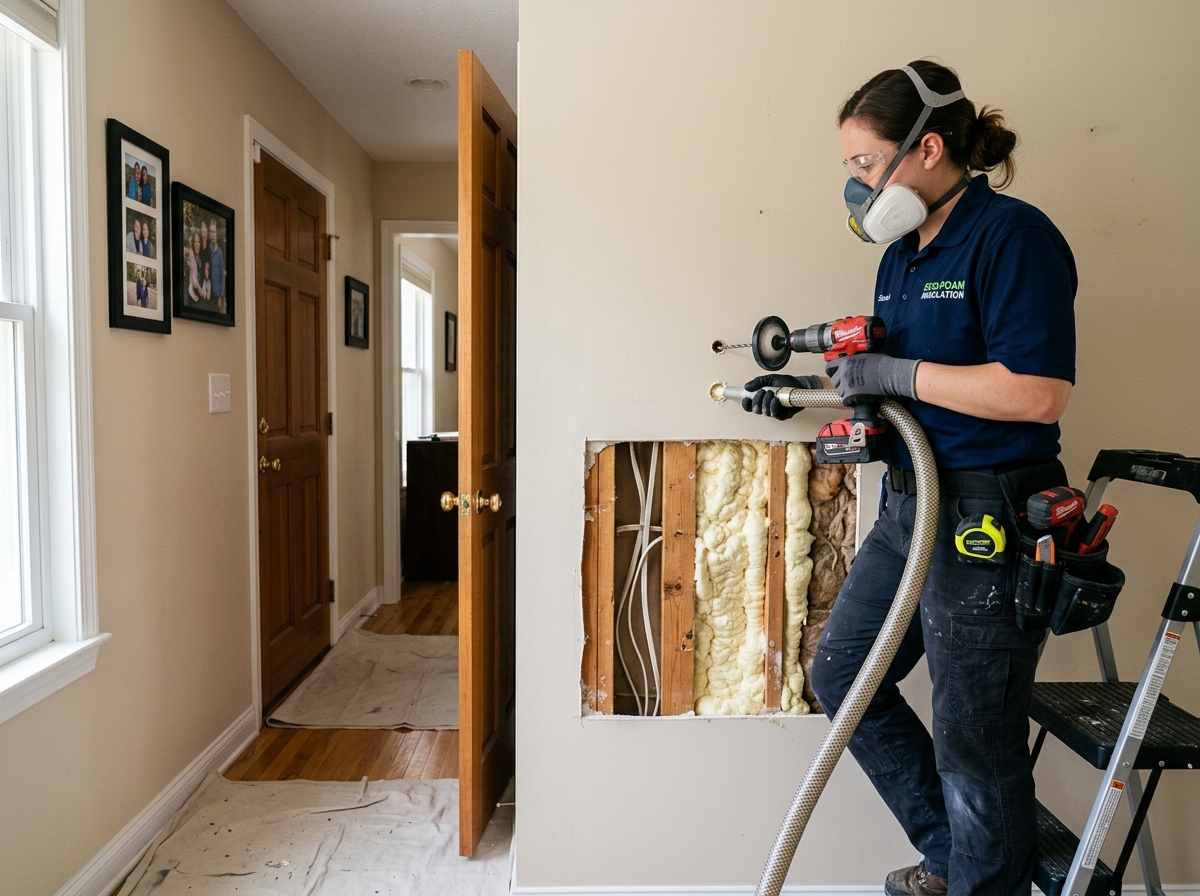
Older homes often present unique challenges, like balloon framing or existing debris in the walls. We’ve put together a specialized guide for these situations: old-house-new-warmth-a-guide-to-modern-insulation.
Long-Term ROI and Financial Incentives
We know that spending $5,000 on insulation isn’t as “fun” as buying a new couch, but the financial return is much better. On average, homeowners see a 15% to 20% reduction in their monthly utility bills. If you pay $300 a month for climate control, that’s $60 back in your pocket every month—or $720 a year.
But the savings don’t stop at your utility bill. Under the Inflation Reduction Act, you can claim a federal tax credit of 30% of the material costs for weatherization, up to $1,200 annually.
Additionally, many local utility companies offer “Home Performance” rebates. These can range from $50 for a small project to over $1,000 for a whole-home insulation upgrade. When you combine tax credits, rebates, and energy savings, many insulation projects pay for themselves in under five years.
To learn more about maximizing these savings, read our article on energy-saving-methods-for-home-insulation.
Frequently Asked Questions about Exterior Wall Insulation Costs
Can I insulate existing exterior walls without removing drywall?
Yes! This is the most common way to upgrade older homes. Using the “drill and fill” method, professionals use either blown-in cellulose or injection foam. They drill small access holes in the siding or the interior drywall, fill the cavity, and then patch the holes. It is significantly more affordable than a full remodel.
How long does it take to install exterior wall insulation?
For a standard 1,500 to 2,000-square-foot home, a professional crew can usually finish the job in 3 to 5 hours. If the project requires removing siding or extensive drywall repair, it might stretch into a two-day project.
What are the signs that my home needs new exterior wall insulation?
If you’re noticing any of the following, it’s time to check your walls:
- Uneven Temperatures: One room is a sauna while the other is an icebox.
- High Utility Bills: Your energy costs are significantly higher than your neighbors’ for a similar-sized home.
- Drafty Outlets: If you feel a breeze coming through your electrical outlets, your wall cavities are likely empty.
- Frozen Pipes: Pipes located in exterior walls should stay warm; if they freeze, your insulation has failed.
Conclusion
At Financefyx, we believe that understanding your home’s “financial leaks” is just as important as managing your bank account. While the initial exterior wall insulation costs might seem daunting, the combination of increased comfort, lower bills, and federal tax incentives makes it one of the smartest investments a homeowner can make.
Whether you choose the budget-friendly route of fiberglass or the high-performance path of spray foam, the key is to prioritize air sealing and professional installation to ensure you get the best possible ROI. Ready to take the next step? Check out the ultimate guide to insulating your home for a complete roadmap to a cozier, more efficient house.
